
What to Expect During a Site Visit for a Tent Rental
If you’ve never planned a tented event before, you may be wondering what actually happens during a site visit.
Do we just show up with a tape measure?
Are we designing your entire event layout?
Will we tell you exactly what tent, flooring, and accessories to choose?
The answer is both simpler and more complicated than most people expect.
A tent rental site visit is primarily a logistical evaluation of your property. Our goal is to determine whether the tent and layout you’ve been quoted for will work at your location, identify any challenges that may affect the installation, and gather information that helps us prepare for a successful setup.
While measurements are certainly part of the process, a site visit is about much more than figuring out if a tent fits.
TLDR / Key Summary
- We measure the proposed tent location and evaluate site conditions.
- We look for potential obstacles like wires, trees, hills, septic systems, and access issues.
- Our site crew focuses on logistics and installation requirements—not event design.
- The sales team uses the site visit findings to update layouts, recommendations, and quotes if needed.
- The goal is simple: identify challenges early and avoid surprises on setup day.
What Happens During a Site Visit?
The funny thing about site visits is that our crew often starts evaluating the property before they even get out of the truck!
As soon as we arrive, we’re looking for things that could impact the installation process. Overhead utility wires, low-hanging tree branches, narrow driveways, steep hills, gravel pathways, stairs, long carrying distances, septic systems, uneven terrain, and access points are all things we immediately notice.
In many ways, our crew is mentally walking through the installation before it ever happens.
- Can the truck access the site?
- How far from the truck is the tent location, and how easily is it accessed?
- Are there obstacles that could interfere with the tent?
- Will the terrain create challenges during installation?
- Is the area conducive to a tent install?
These are the types of questions we’re constantly asking ourselves.
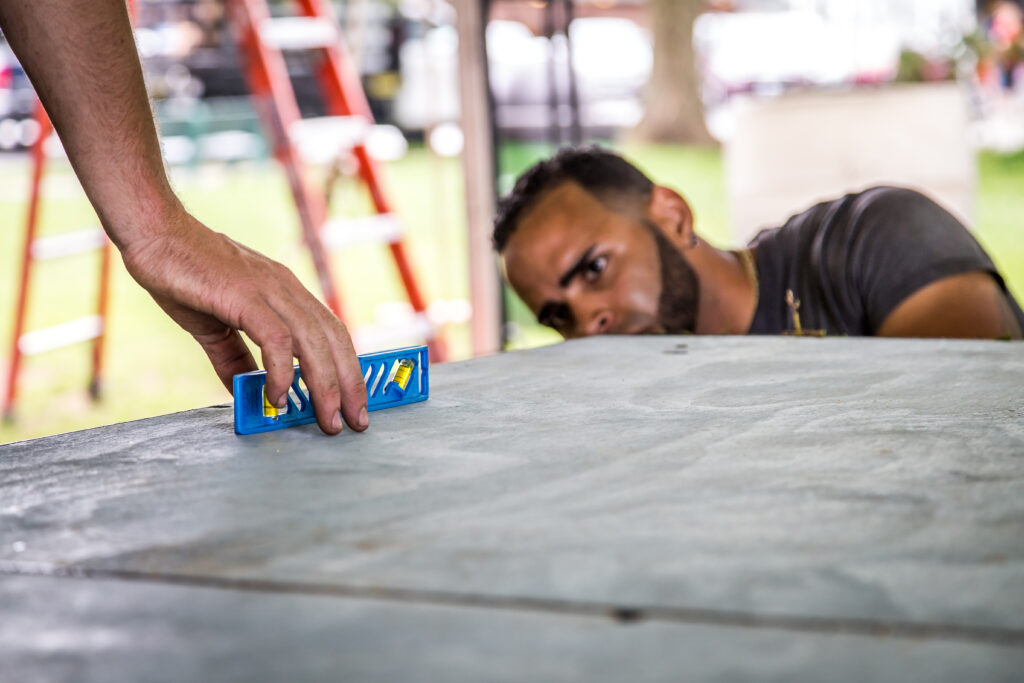
Of course, we also take measurements. In most cases, we’re measuring the workable area associated with the tent or layout you’ve already been quoted for. If you’ve requested a 40’x60′ tent in your backyard, that’s the area we’re evaluating. Our goal is to confirm that the proposed installation will work within the available space and identify any adjustments that may be needed.
What a Site Visit Is NOT
One of the biggest misconceptions about a tent rental site visit is that the crew member is there to design your event. While they may answer questions and provide input, their primary role is to evaluate the site and determine what is physically possible from an installation standpoint.
For example, they may help determine whether your property can accommodate a Sailcloth Tent or whether a Frame Tent would be a better fit based on the available space and anchoring requirements. A Sailcloth Tent requires staking and 12 additional feet of clearance around the perimeter, while a Frame Tent may offer more flexibility depending on the site conditions.
Similarly, they aren’t typically designing your floor plan or deciding where tables, bars, or food stations should go. However, they may identify areas of the property that are more suitable than others. If part of the site is noticeably sloped, they may recommend using that area for a buffet, bar, or DJ rather than guest dining tables.
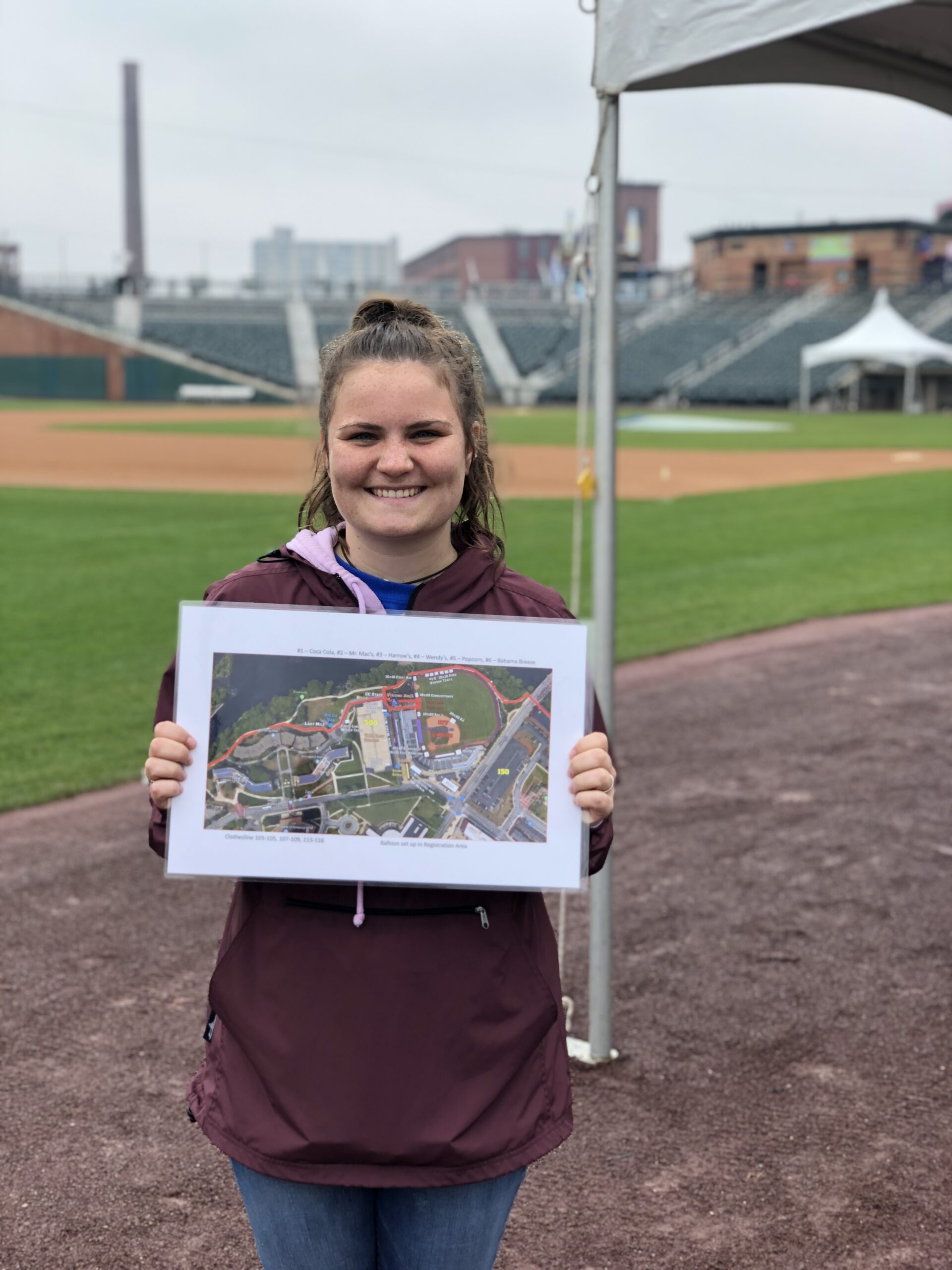
Think of it this way: the site visit team focuses on logistics and feasibility. They’re evaluating what the site can realistically accommodate. The sales team takes that information and helps turn it into an event layout that works for your guest count, vision, and overall event goals.
Both perspectives are important, and together they create a much stronger planning process!
Why the Site Crew and Sales Team Work Together
One of the things clients don’t always see is what happens after the site visit.
Once our crew returns to the office, they share everything they observed onsite with the sales team. That information helps us determine whether any changes need to be made to the original proposal.
Sometimes everything stays exactly the same. Other times, the site visit reveals opportunities to improve the layout or challenges that require adjustments.
We may discover that a different tent size works better. We may recommend relocating the tent to a different area of the property. In some cases, we may suggest adding leveled flooring due to uneven terrain or using ballast blocks if staking isn’t possible. Occasionally, we even find room for additional tents or event spaces that weren’t originally part of the plan.
The site crew provides the logistical information, and the sales team uses that information to help create the best possible solution for the event.
When Is a Site Visit Most Helpful?
Not every event requires a site visit.
For a straightforward installation with plenty of open space, photos and measurements are often enough.
Site visits become particularly valuable when the setup is more complex. Large weddings, festivals, corporate events, public gatherings, tight installations, multiple tent layouts, uneven terrain, and sites with challenging access are all situations where having someone walk the property can be incredibly helpful.
Site visits are also beneficial when a client simply isn’t sure what will fit.
Sometimes a space looks larger in photos than it does in person. Other times, we discover opportunities that weren’t obvious from the initial conversation.
The more information we have about the site, the better we can prepare.
The Real Purpose of a Site Visit
At the end of the day, a tent rental site visit isn’t really about measuring a backyard.
It’s about gathering information.
The goal is to understand the property, identify potential challenges, and make sure everyone involved in the project has the information they need before installation day arrives.
The site crew is looking at your event through a logistical lens. The sales team is looking at it through a planning and design lens. Together, they help create an event that is both functional and beautiful.
And while a successful event always looks effortless on the day of the celebration, that success usually starts long before the tent ever arrives.
Sometimes, it starts with a site visit!
Planning a Tented Event?
If you’re unsure whether your event requires a site visit, our team is happy to help. We’ll review your property, discuss your event goals, and determine whether a site visit would be beneficial for your project.
Contact Baystate Tent & Party today to start planning your event! Our team would love to help.

Wedding Whisperer | Dog Mom | Creative Enthusiast
Samantha has been an integral part of the Baystate Tent & Party team since 2016, combining a lifelong passion for weddings and special events with years of hands-on experience in the event rental industry. She loves helping clients bring their vision to life, balancing creative design with thoughtful planning and attention to detail to create celebrations that feel effortless. Known for building lasting relationships with her clients, Samantha believes every event is unique and enjoys guiding couples through the planning process with honesty, organization, and genuine excitement for their big day. When she’s not talking tents and timelines, Samantha is a true lake girl who enjoys spending time with her black lab, Frankie, soaking up the sunshine, and getting lost in a good romance novel.