
How to Budget for a Wedding: A Tented Wedding Budget Guide
You’re engaged!!! Now comes the fun part—actually planning the wedding.
One of the first steps is creating a wedding budget. We know, budgeting might not sound quite as exciting as choosing your tent, trying on dresses or building your Pinterest board, but having a realistic budget from the beginning makes all of those decisions SO much easier.
And the good news? There isn’t one “right” way to spend your wedding budget.
Every couple has different priorities. You might care most about an incredible photographer, amazing food and a packed dance floor. Maybe you’ve been dreaming about a beautiful tent filled with lighting, draping and flowers. Or maybe you want to keep the design simple and put more of your budget toward entertainment and the guest experience.
If you’re planning a tented wedding, you have even more flexibility to make those choices. A tent gives you a blank canvas to create a reception that feels completely your own—from the tent itself to the chairs, linens, lighting, flooring, dance floor and everything in between.
At Baystate, we’ve been helping couples build tented weddings throughout New England for decades, from simple backyard celebrations to completely transformed spaces. You don’t need to have every detail figured out before you call us. That’s what we’re here for!
So before you start booking every vendor and adding up every little expense, let’s walk through how to build a wedding budget, where your tent and rentals fit into it, and how to put your money toward the things that matter most to you.
TL;DR: How to Build a Wedding Budget
- Start with the maximum total amount you’re comfortable spending.
- Create a realistic guest list early.
- Decide which parts of the wedding matter most to you.
- Use wedding-budget percentages as a starting point—not a rule.
- Get actual quotes for your biggest expenses early.
- If you’re having a tented wedding, budget for the tent and rentals as one of your major categories.
- Remember any additional property or venue expenses like power, restrooms or transportation.
- Adjust the budget as you get real numbers.
1. Start With What You’re Comfortable Spending
Before deciding how much to spend on flowers or photography, figure out the big number:
What are you comfortable spending on the wedding as a whole?
That doesn’t mean you need to know exactly how you’re going to divide it yet. In fact, we wouldn’t get too attached to category percentages before you’ve done some research. Wedding costs vary enormously based on location, guest count, style and priorities.
Think of your first budget as a framework.
If you’re comfortable spending $50,000, start there. Then research what the wedding you’re envisioning actually costs and decide how you want to allocate that money.
2. Create Your Guest List Early
Your guest count affects SO much more than catering.
More guests can mean a larger venue or tent, more tables and chairs, additional linens, more centerpieces, invitations, bar costs, transportation and, of course, food.
You don’t need your final RSVP count when you’re creating your initial wedding budget, but you should have a realistic guest count estimate.
There’s a significant difference between budgeting for a 75-person wedding and a 200-person wedding!
Guest count also affects the amount of space you’ll need underneath a tent. If you’re planning an outdoor wedding, our guide to how much space you need for a wedding tent is a helpful next step!
3. Decide What Matters Most to You
There is no universal “correct” way to spend a wedding budget.
Maybe photography is incredibly important to you, but elaborate florals aren’t. Allocate more money to photography!
Maybe you care most about food and entertainment.
Or maybe you have a very specific vision for the reception and want to put more of the budget toward the tent, chairs, flooring and lighting.
Your wedding budget should reflect your priorities—not someone else’s percentages.
This is also why we recommend deciding what matters most before you start upgrading everything.
You don’t need the premium version of every single wedding detail. 🙂
4. Get Real Quotes for Your Biggest Expenses
Wedding budget calculators can be helpful when you’re starting from zero. But eventually, percentages need to turn into actual numbers.
Start getting quotes for the major pieces of your wedding early.
Your venue or property, catering and bar, tent and rentals, planner, photography, videography, and entertainment can represent a significant portion of the overall budget.
Once you have those numbers, you can make much more informed decisions about everything else.
This is especially important when you’re choosing your venue. Before signing a contract, understand what’s included and what you’ll need to bring in separately. We go much deeper into this in our guide to choosing a wedding venue.
5. How Much Should You Budget for a Wedding Tent and Rentals?
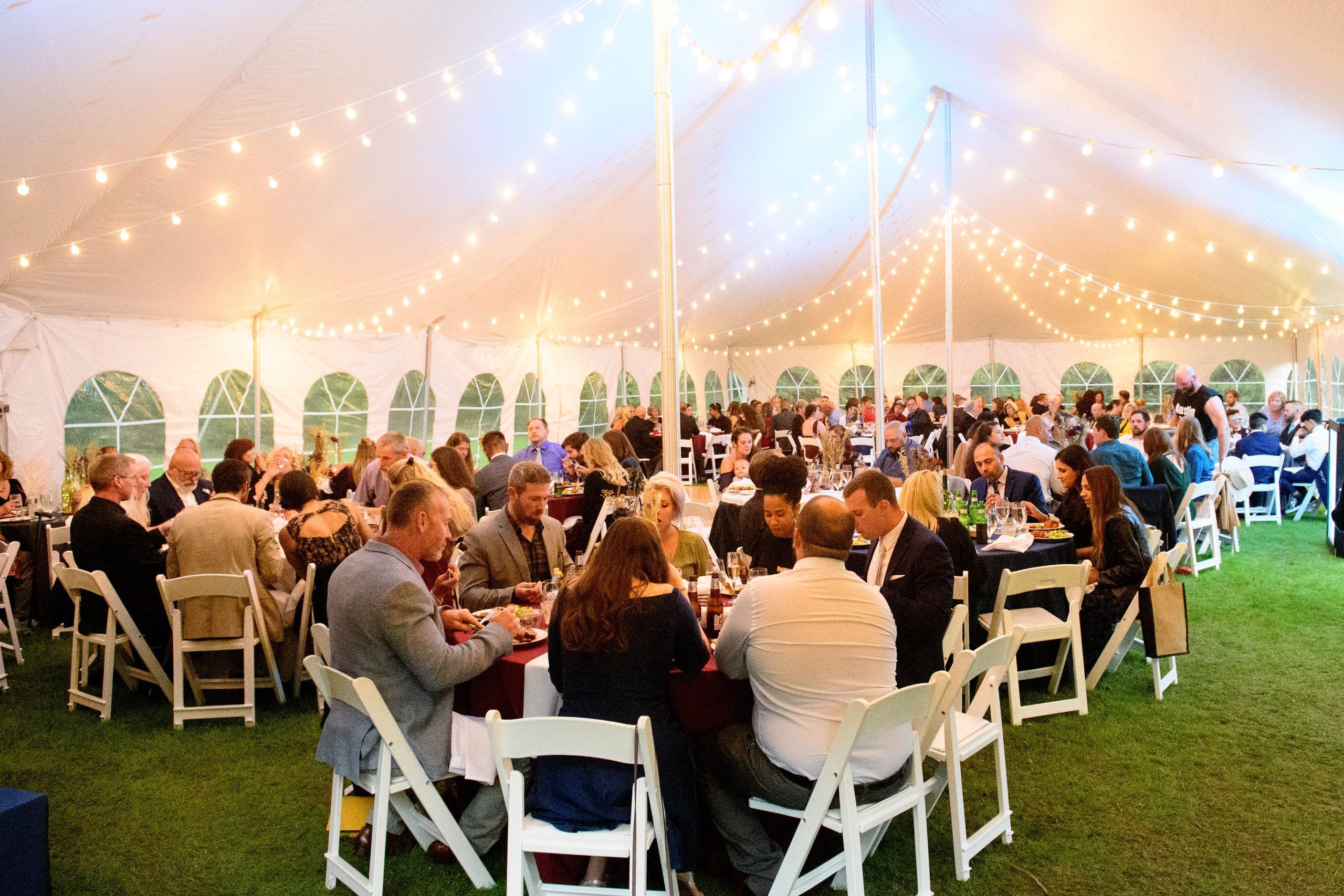
For a tented wedding with Baystate, we typically see the tent and core rentals range from approximately $50–$250 per guest.
That generally includes your tent, tables, chairs, dance floor, linens, lighting and labor.
Why such a large range?
Because your rental budget is incredibly customizable!
Two 100-person weddings can look completely different.
- A fairly simple 100-person wedding located close to our warehouse using our more basic rental selections may be around $6,000.
- Another couple with the same 100 guests may choose a different tent style, full flooring, upgraded chairs, specialty linens and other design elements and spend $35,000 or more.
Same guest count, different priorities!
If you’re curious specifically about tent pricing, we’ve broken that down separately in How Much Does a Wedding Tent Cost?
And when you’re ready to start thinking about the fun stuff, you can browse Baystate’s full wedding rental inventory, including tents, tables, chairs, linens, flooring, staging, bars, lighting, heating and fans.
6. Build Your Rental Budget Around Your Priorities
This is where having a tent can actually make budgeting really fun.
You have a blank canvas and a LOT of choices.
Start with what you need: your tent options, tables, chairs, linens, lighting and dance floor.
Then decide what you care about upgrading!
Maybe you love a particular chair and know you’ll see it throughout the entire reception. Spend there!
Maybe you want full flooring because it’s an important part of the finished look you’re creating.
Maybe specialty linens don’t matter much to you. Choose something simple and put that money toward something you care about more.
Every rental doesn’t have to be an upgrade.
Browse the Baystate rental inventory while you’re budgeting. Seeing the actual options makes it much easier to decide which details matter to you and which ones you’re happy to keep simple.
7. Add the Rest of Your Wedding Vendors
Once you’ve accounted for your venue/property and rentals, start filling in the other major categories.
Your wedding budget may include catering, bar service, planning/coordination, photography, videography, entertainment, florals and décor, officiant, hair and makeup, wedding attire and alterations, invitations and day-of stationery, transportation, lounge furniture, content creation and wedding rings.
You may also be budgeting for a rehearsal dinner, welcome party or after-party.
If you’re still building your vendor team, check out our Recommended Wedding Vendors. We’ve worked alongside so many incredible wedding professionals throughout New England, and we’re always happy to point our couples toward vendors we know and trust!
8. Having a Backyard Wedding? Add Your Property Expenses
If you’re getting married at home or another private property, add a few additional lines to your wedding budget.
You may need restroom trailers, additional power or generators, catering equipment or a catering tent, trash removal, and off-site parking or guest transportation.
These aren’t reasons to avoid a backyard wedding. They’re simply part of budgeting accurately for one.
A private-property wedding gives you an incredible amount of flexibility. You’re choosing the location, vendors, tent, layout and overall look rather than working within an existing ballroom.
Just make sure you’re comparing the total cost with what an established venue includes.
We talk much more about backyard/private-property considerations in our wedding venue guide.

9. Don’t Forget About Power
If you’re having a tented wedding at a private property, talk to your vendors about their power requirements early.
Your caterer, band or DJ, lighting company, restroom provider and other vendors still all need electricity—and certain equipment cannot simply be plugged into the same household circuit.
Ask each vendor what they require and determine what the property can safely support. If additional power is necessary, include it in the budget from the beginning.
This is a small planning conversation that can make the actual wedding day run much more smoothly.
10. Get Your Tent Quote Early
If you’re planning a tented wedding, we recommend starting the conversation with your rental company 6–12 months before the wedding, particularly for peak dates.
You don’t need every linen color or chair selected yet!
Start with your approximate guest count, location and overall plans. From there, we can help determine an appropriate tent size, create an initial layout and give you a realistic rental estimate to put into your wedding budget.
When requesting quotes, our article on questions to ask a tent rental company is also a helpful resource for understanding what should be included when you’re comparing proposals.
11. Expect Your Wedding Budget to Change
Your first wedding budget probably won’t look exactly like your final one. And that’s okay!
As you get quotes and make decisions, you may realize you want to spend more in one category and less in another.
Maybe catering comes in below what you expected, so you upgrade your chairs. Maybe your dream photographer costs more, so you keep the linens simple. Maybe you decide you don’t care about favors and move that money somewhere else.
A wedding budget isn’t supposed to lock you into every decision on day one.
It’s a tool that helps you decide where you want your money to go.

There Is No “Right” Way to Spend a Wedding Budget
Two couples can have the exact same wedding budget and plan completely different weddings.
The same goes for tented weddings.
We’ve seen 100-person rental orders around $6,000 and others around $35,000. One isn’t automatically better than the other. They’re simply different events with different priorities.
Start with what you’re comfortable spending. Create a realistic guest list. Decide what matters most to you. Get actual quotes for your biggest expenses. Then adjust from there.
And if you’re having a tented wedding, enjoy the flexibility that comes with it!
You can choose the tent, layout, chairs, tables, flooring, dance floor, linens, lighting and all the little details that turn the space into your wedding.
Planning a Tented Wedding in Massachusetts or New Hampshire?
Baystate Tent & Party has been helping couples create tented weddings throughout Massachusetts, New Hampshire and New England since 1984. Our wedding inventory includes multiple tent styles, tables, chairs, linens, dance floors, flooring, staging, lighting and more.
If you’re starting to build your wedding budget, browse our wedding rentals and full rental inventory to start figuring out what you love.
Then reach out to our team! We’ll help you put together a rental plan based on your guest count, property, priorities and budget.
Wedding Whisperer | Dog Mom | Creative Enthusiast
Samantha has been an integral part of the Baystate Tent & Party team since 2016, combining a lifelong passion for weddings and special events with years of hands-on experience in the event rental industry. She loves helping clients bring their vision to life, balancing creative design with thoughtful planning and attention to detail to create celebrations that feel effortless. Known for building lasting relationships with her clients, Samantha believes every event is unique and enjoys guiding couples through the planning process with honesty, organization, and genuine excitement for their big day. When she’s not talking tents and timelines, Samantha is a true lake girl who enjoys spending time with her black lab, Frankie, soaking up the sunshine, and getting lost in a good romance novel.