
Types of Event Tents: A Simple Guide to Each Style
Last Updated: January 28, 2026
If you’re planning an event and trying to figure out what kind of tent you need, you’re not alone. Most people Google a few pictures, see a mix of poles, cables, clear tops, and huge white structures, and think, I have no idea what I’m looking at.
I get it! There are a lot of options, and the names can be confusing (especially when companies don’t call each tent by the same name!). So here’s a simple breakdown of the types of event tents we install at Baystate Tent and what makes each one special.

TLDR / Key Summary
- There are two main categories of event tents: pole tents and frame/structure tents.
- Understanding the various types of event tents helps you select the perfect fit for your occasion.
- Pole tents include canopy tents and sailcloth tents. They have center poles and require staking.
- Frame tents have no center poles and work great on pavement or tight spaces.
- Structure tents are engineered for snow, wind, and long-term installs.
- Your ground surface, budget and event style will point you toward the right tent
Understanding the Different Types of Event Tents
There are two main categories of event tents: pole tents and frame/structure tents. In this article, we will go over the details in intricacy to help you decide which suits your event best.
Among the types of event tents, each serves different purposes and styles, making it essential to choose wisely.
Pole Tents
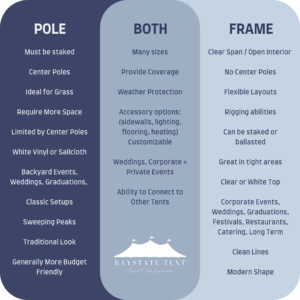
Pole tents are the classic tent style most people picture. They have center poles in the middle and stakes around the perimeter. The stakes keep the tent tight and help hold its shape. Because of that, pole tents really need grass or dirt. We can stake into pavement as long as you’re okay with it.
Pole tents are one of the most popular types of event tents due to their classic design.
If you’re wondering, “What is a pole tent?” – A pole tent is a tent supported by center poles and perimeter stakes. It relies on tension to stay up.
There are two main types:
1. Canopy / Century Pole Event Tents
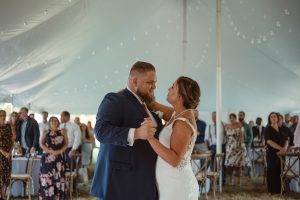
Canopy pole tents are the traditional white tents with aluminum perimeter poles and one or more center poles inside. They’re simple, clean, and come in a wide range of sizes.
People use canopy tents for weddings, graduations, corporate events, fundraisers, and backyard parties. They’re flexible and work for a lot of layouts, as long as the site can be staked. The sizes range from 20×20 all the way up to 80×240!
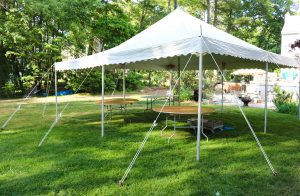
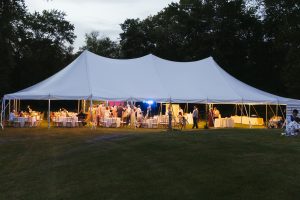
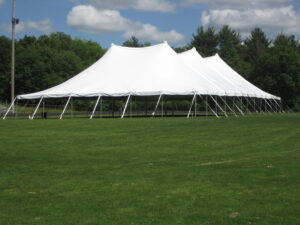
And the question we get all the time: “Can a canopy tent go on pavement?”
Yes — but only if we’re allowed to stake into it! The stakes will leave holes in your pavement.
2. Sailcloth Pole Event Tents
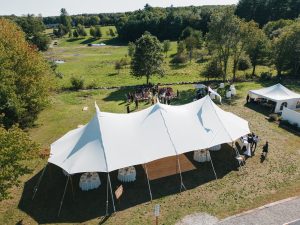
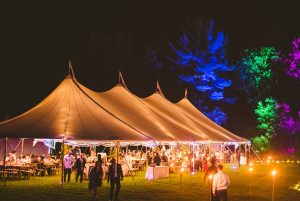
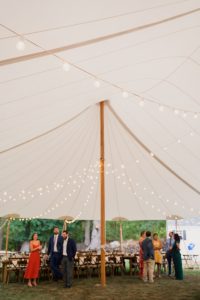
Sailcloth tents are the softer, more romantic version of a pole tent. They have rounded ends and a translucent fabric that lets natural light shine through. At night, they almost glow from the inside. The look is inspired by old sailboats, so it has a coastal, airy feel.
The unique appearance of sailcloth tents makes them a sought-after choice among types of event tents.
People ask, “What is a sailcloth tent?”
A sailcloth tent is a pole tent with a translucent sail-style top that creates a natural, glowing look.
If you’re planning a wedding or a high-end private event, this is usually the first tent people gravitate toward.
Frame & Structure Event Tents
Frame tents and structure tents are different from pole tents because they don’t use center poles. Everything is held up by an aluminum frame, which means the interior is completely open, aka clearspan. You can build out almost any layout without working around poles in the middle.
These tents can be anchored with stakes or with concrete blocks, so they’re perfect for pavement, parking lots, patios, and tight spaces.
If you’ve ever wondered, “What is a frame tent?” A frame tent is a clear span tent with no center poles, supported by an aluminum frame.
Here are the three main styles Baystate offers:
1. High Peak Frame Tents
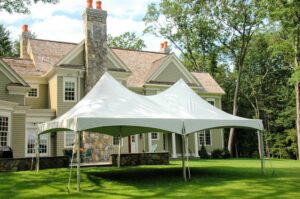
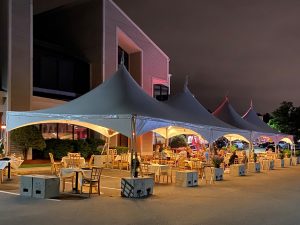
High Peak Frame Tents give you the tall center peak of a pole tent, but without an actual pole in the middle. The peak is held up by cables inside the frame. These work well for caterers, festivals, vendor spaces, or smaller events where you want a clean, high end look.
If you need something larger, you’d move up to a QuickTrack frame.
2. QuickTrack / Jumbotrac Frame Tents
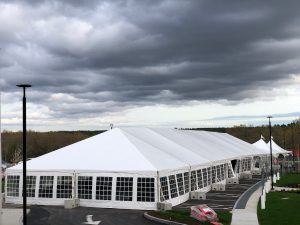
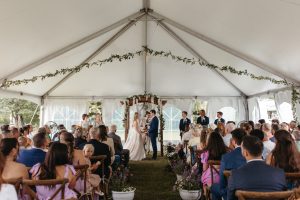
QuickTrack Tents work well for medium to large events where a clear span is preferred, or where staking is not allowed. These tents use a kedered frame system, which means the fabric slides into tracks. It creates clean tension and a strong, weather-friendly structure.
People often ask:
“When should I choose a frame tent instead of a pole tent?” You choose a frame tent if the area is pavement, if staking is limited, or if you want a totally open floor plan with no center poles, giving you more design control.
These are extremely versatile and work almost anywhere.
3. Clear Top Frame Tents
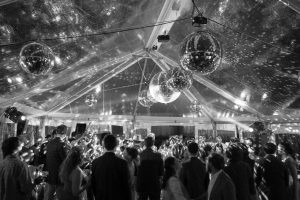
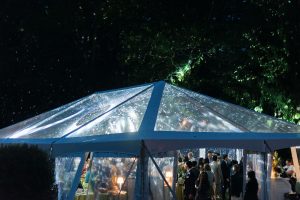
Clear Tops Tents make the tent feel connected to the outdoors. Natural light fills the space during the day, and once the sun sets, the roof highlights the sky and the lighting inside the tent. It creates a strong visual effect, especially for dancing or evening celebrations! They can get warm in full sun, so the time of day and season matters!
If you’re wondering, “Are clear top tents good for weddings?”
Clear top tents are great for weddings when the weather is mild or when the event takes place later in the day.
Structure Tents
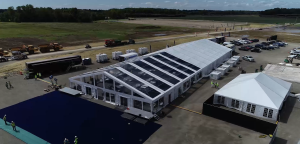
Structure Tents are the strongest and most engineered option. These aren’t your typical event tents — they fall closer to temporary buildings. They’re designed to handle snow, wind, and long-term installations. They also have higher ceilings and can be fully customized.
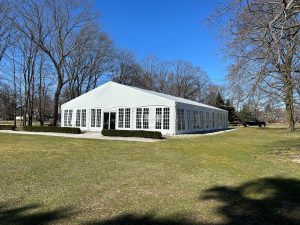
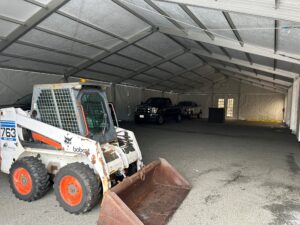
If you’re thinking, “What is a structure tent?”
A structure tent is an engineered aluminum-beam tent designed for long-term use, harsh weather, and large-scale events.
We can build these from 20′ wide up to 80’+ wide. They’re commonly used for luxury weddings, commencements, corporate installations, temporary hospitals, and seasonal needs.
Why people choose structure tents:
- They’re fully engineered
- They can handle snow and wind
- They work all year
- They allow full customization
People also ask: “Can structure tents be used year-round?” Yes! Structure tents are designed for all seasons.
To learn more about structures, click here!
Pole Tent vs. Frame Tent vs. Structure Tent
Sometimes it helps to step back and compare them.
Pole tents are great if you have grass and like the look of sweeping peaks.
Frame tents work almost anywhere and give you an open layout.
Structure tents are the best choice when you need something strong, long-term, or weather-resistant.
Still confused about the difference between a frame tent and structure tent? You’re not alone. That’s why we break it down into every detail on our blog – Frame Tent vs Structure Tent: What’s the Difference?
How to Choose the Right Type of Event Tent
I get this question a lot:
“What tent do I need for my event?”
Here’s the quick version:
- If you have grass → pole tents or frame tents both work.
- If you have pavement → frame tents or structure tents.
- If you want romance → sailcloth.
- If you need strength or winter use → structure.
- If you’re working in a tight or awkward space → frame tent.
- If you’re on a tight budget → canopy tent.
And if you’re not sure, that’s normal! We are more than happy to help. We look at your event site, ask a few questions about your event, and tell you what makes the most sense.
Final Thoughts
Understanding the types of event tents makes planning easier. You don’t have to know everything — you just need to know what works for your site and your event (and your design taste!). And once you have that, the rest of your planning gets a lot simpler.
If you want help figuring out what tent fits your space, we’re happy to take a look and walk you through the options! Contact Baystate Tent & Party today for all your event rental needs.
Follow our Instagram page for content of all our different types of event tents!

Wedding Whisperer | Dog Mom | Creative Enthusiast
Samantha has been an integral part of the Baystate Tent & Party team since 2016, combining a lifelong passion for weddings and special events with years of hands-on experience in the event rental industry. She loves helping clients bring their vision to life, balancing creative design with thoughtful planning and attention to detail to create celebrations that feel effortless. Known for building lasting relationships with her clients, Samantha believes every event is unique and enjoys guiding couples through the planning process with honesty, organization, and genuine excitement for their big day. When she’s not talking tents and timelines, Samantha is a true lake girl who enjoys spending time with her black lab, Frankie, soaking up the sunshine, and getting lost in a good romance novel.