
Tent Series: What Is a QuickTrack Frame Tent?
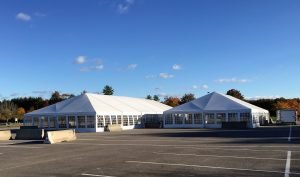
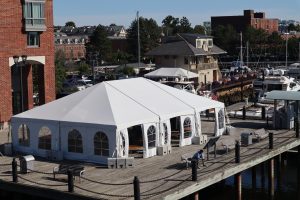
A QuickTrack Frame Tent is a clear-span frame tent built with a keder track system that creates a fully open interior. There are no center poles to work around, and it requires only 5 feet of staking clearance. It can be installed on pavement, concrete, patios, or grass.
It’s one of the most versatile larger-format tents we install at Baystate Tent. And in many cases, it solves layout and surface challenges that other tent styles can’t.
TLDR / Key Summary
- A QuickTrack Frame Tent is a clear-span aluminum frame tent with a keder track roof system.
- It requires only 5 feet of staking clearance, compared to 10’ for canopy tents and 12’ for sailcloth tents.
- It can be installed on pavement, concrete, patios, or grass.
- There are no center poles, allowing full layout flexibility.
- It’s ideal intricate ceiling installations such as drapery and chandeliers.
- It has a sleek, structured exterior look.
- It is typically more expensive than canopy tents.
-
Ideal when installing a full subfloor or event flooring
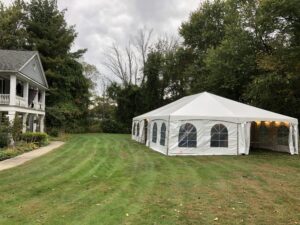
If your event site limits staking or you need an open interior, this is often the right fit.
What Is a QuickTrack Frame Tent?
A QuickTrack Frame Tent is a clear-span, engineered aluminum frame tent that uses a keder track system to tension the roof fabric. Clear-span means there are no center poles. The structure is supported entirely by the perimeter frame. That gives you a completely open interior.
The keder system allows the roof panels to slide into built-in track channels along the beams. This creates consistent tension across the top and sidewalls.
You may also hear this referred to as a Jumbotrac system. It’s commonly used for weddings, corporate events, nonprofit galas, and large private gatherings.
How a QuickTrack Is Built
The structure is assembled using aluminum beams that form a rigid frame.
Once the frame is built:
- Roof panels slide into the track system
- Sidewalls attach through the same keder channels
- The structure is secured with staking or ballast
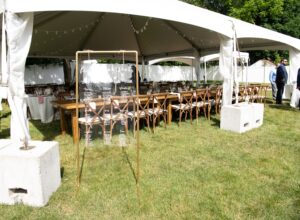

Because the roof is evenly tensioned across a frame, it stays tighter and cleaner in appearance. This also makes it ideal for ceiling décor. Chandeliers, drapery, café lighting, and overhead installs integrate more cleanly into a clear span frame tent. Since the structure is fully supported by its perimeter frame, it pairs well with full flooring systems. When installing a wall-to-wall subfloor, a clear-span frame tent provides cleaner integration and more stability than pole-supported tents.
If you’re planning a heavy ceiling treatment, this structure makes that possible.
Where They Can Be Installed
QuickTrack Frame Tents are extremely flexible when it comes to surface conditions.
They can be installed on:
- Asphalt parking lots
- Concrete pads
- Patios
- Driveways
- Grass lawns
- Mixed terrain
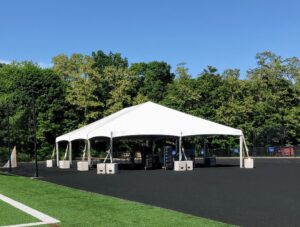
If staking is not allowed, ballast weights are used instead.
Many venues restrict staking because of irrigation, underground utilities, or proximity to buildings. A frame system with ballast anchoring solves that issue.
Staking Clearance Requirement
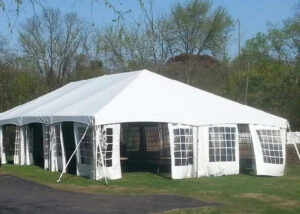
This is one of the biggest advantages of a QuickTrack system. It requires approximately 5 feet of clearance around the perimeter for staking.
For comparison:
- A canopy tent typically requires 10 feet.
- A sailcloth tent typically requires 12 feet.
That difference can be significant! If your property has landscaping, fencing, retaining walls, patios, or neighboring structures nearby, reducing staking clearance can determine whether a tent fits at all.
When space is tight, this tent style often becomes the only workable option.
Sizes and Pricing at Baystate Tent
Below are common QuickTrack sizes and base pricing. Final pricing depends on surface conditions, ballast needs, sidewalls, lighting, flooring, and accessories. Please contact us for the most accurate pricing!
| Tent Size | Seated Capacity (Tables Only) | Standing Capacity (Open Space) | Typical Wedding Size | Base Price |
|---|---|---|---|---|
| 30×30 | 60 guests | 180 guests | 30–40 guests | $900 |
| 30×45 | 90 guests | 270 guests | 50–60 guests | $1550 |
| 30×60 | 120 guests | 360 guests | 70–80 guests | $2070 |
| 30×75 | 150 guests | 450 guests | 85–100 guests | $2585 |
| 30×90 | 180 guests | 540 guests | 95–120 guests | $3100 |
| 30×105 | 210 guests | 630 guests | 120–150 guests | $3600 |
| 40×40 | 90 guests | 270 guests | 60–80 guests | $1600 |
| 40×60 | 160 guests | 480 guests | ~100 guests | $2400 |
| 40×80 | 210 guests | 640 guests | 120–150 guests | $3680 |
| 40×100 | 260 guests | 800 guests | 180–200 guests | $4600 |
| 40×120 | 320 guests | 960 guests | 190–220 guests | $5520 |
| 40×140 | 370 guests | 1120 guests | 225 guests | $6440 |
Industry planning standards recommend:
-
15 square feet per guest for seated dinners
-
6–8 square feet per guest for cocktail-style events
Because there are no center poles, every square foot can be used efficiently.
What They Work Well For
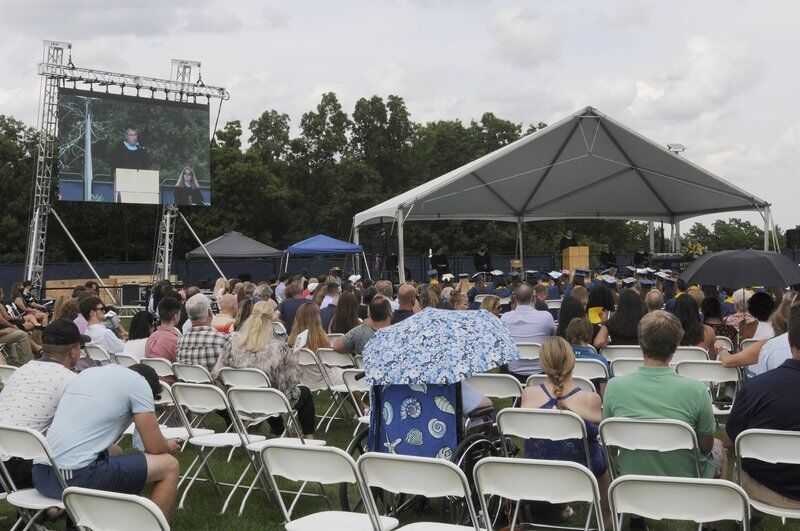
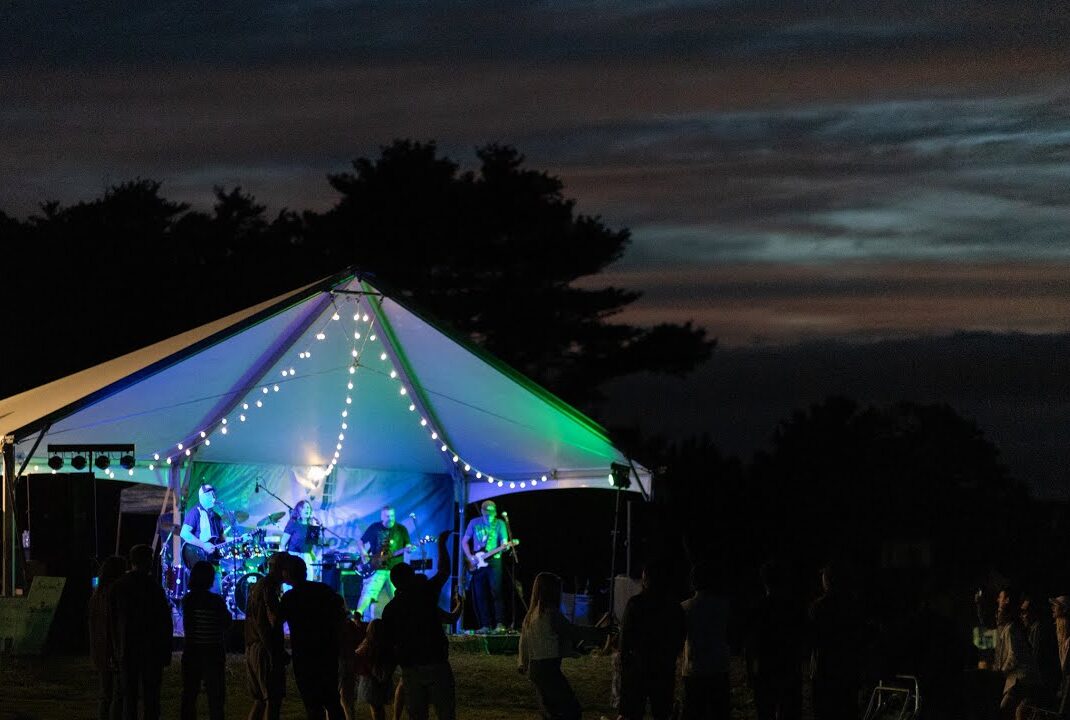
Outdoor Graduations, Concerts, and Performances
QuickTrack Frame Tents are commonly used as stage covers for outdoor events. The structure provides overhead protection for performers, speakers, instruments, and sound equipment while keeping the front open to the audience.
At Baystate Tent, we refer to this configuration as a Half Shell QuickTrack. It’s a popular setup for summer graduations, concerts, recitals, and community performances where coverage is needed without enclosing the stage.
Weddings
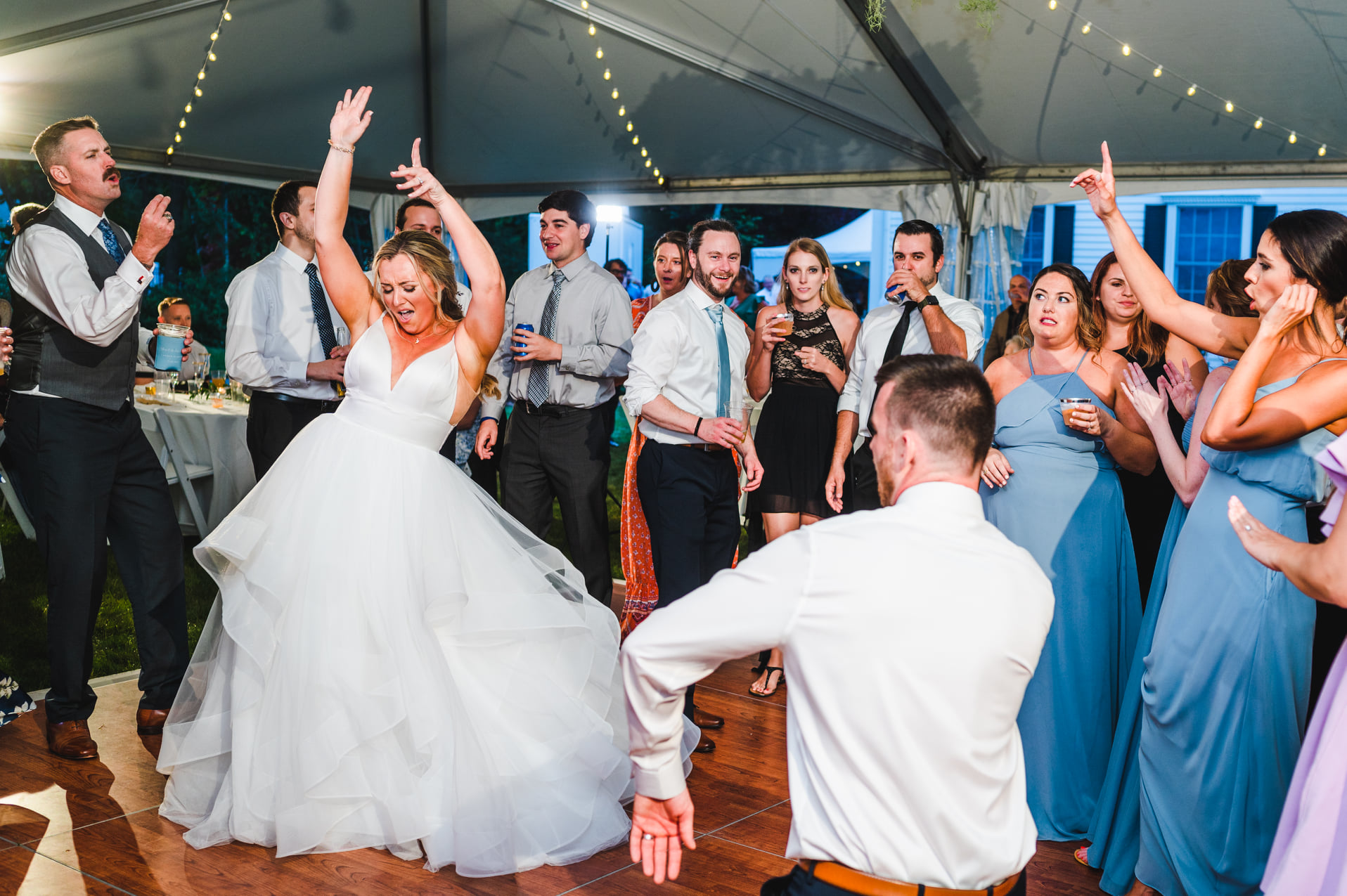
If you want a large dance floor without poles interrupting the layout, this matters. In canopy and sailcloth tents, center poles cannot be positioned over a dance floor. With a clear-span frame, you don’t design around obstacles.
Corporate events
Product launches, hospitality lounges, and staged presentations benefit from an open interior.
Tight properties
Reduced staking clearance allows installations in areas where pole tents would not fit.
Design Support
Rigid framing supports chandeliers, drapery, and layered lighting installs more cleanly. It’s also the strongest choice when you’re installing a full floor. Without center poles interrupting the space, wall-to-wall flooring and large dance floors can be installed cleanly.
Pros and Considerations
| Pros | Considerations |
|---|---|
| Requires only 5 feet of staking clearance | More expensive than canopy tents |
| Can be installed on pavement, concrete, or grass | Ballast increases cost when staking isn’t allowed |
| No center poles — fully open layout | Can look industrial for weddings or galas if not decorated properly |
| Strong structure for chandeliers, drapery, and ceiling installs | |
| Sleek, clean exterior lines | |
| Sidewalls slide on a keder track like a curtain (unique to this tent style) |
The look can absolutely be softened with drapery, lighting, and thoughtful design. But without décor, it presents a more structured appearance than sailcloth.
Recent QuickTrack Projects
Recent installations include:
- North Shore Cancer Walk at Salem Willows
- Windham High School Graduation
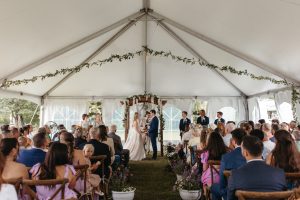
- Lauren & Andrew’s Backyard Wedding
In each case, surface conditions, layout requirements, or stylistic preferences made this tent the right choice.
Frequently Asked Questions
- What is a QuickTrack Frame Tent?
A QuickTrack Frame Tent is a clear-span aluminum frame tent that uses a keder track system to tension the roof and sidewalls. - How much staking clearance does it require?
Approximately 5 feet around the perimeter, compared to 10 feet for canopy tents and 12 feet for sailcloth tents. - Can it go on pavement?
Yes. It can be secured with engineered ballast weights when staking is not allowed. - Is it good for weddings?
Yes, especially when you want an open layout and large uninterrupted dance floor, or intricate ceiling installs such as drapery or chandeliers. - Is it more expensive?
Yes. They typically costs more than pole-style tents. - Is a QuickTrack Frame Tent good for full flooring installations?
Yes. A QuickTrack Frame Tent is one of the best tent styles for wall-to-wall subfloor and event flooring systems because it has no center poles and a rigid perimeter structure.
Explore More in the Tent Series
If you’re comparing options, you may also want to read:
- Full Guide: Types of Event Tents
- Tent Series: Canopy Tent Guide
- Tent Series: Sailcloth Tent Guide
- Tent Series: Clear Top Frame Tent Guide
- Tent Series: High Peak Frame Tent Guide
- Tent Series: Structure Tent Guide
Final Thoughts
A QuickTrack Frame Tent is about flexibility and structure. If your event site is tight, paved, or restricted from staking — or if you want a completely open interior — this system often makes the most sense. The right tent should fit your property before it fits your design vision.
If you’re unsure what your site can accommodate, we can review it with you and recommend the right structure. Whenever you’re ready, we’re here to help you plan the right setup for your event. Follow us on Instagram for more content, and contact us today for a quote!

Wedding Whisperer | Dog Mom | Creative Enthusiast
Samantha has been an integral member of the Baystate Tent team since 2016, combining a lifelong passion for event design with a deep understanding of logistics and client care. Earning her Wedding Planning Certificate from the University of New Hampshire, she brings both creative vision and meticulous attention to detail to every celebration. Samantha excels at orchestrating seamless events, ensuring that each couple’s vision is brought to life with precision and elegance. Outside of work, Samantha is a certified yoga teacher who offers calming bridal yoga sessions, helping couples start their big day with balance and mindfulness. A true lake girl, Samantha spends her downtime soaking up sunshine by the water with her black lab, Frankie, with a good romance novel in hand.