
Can Tents Be Installed on Pavement or Patios?
One of the most common questions we get is:
Can tents be installed on pavement or patios?
The short answer is yes! Tents can be installed on pavement or patios.
A tent on pavement or patio is extremely common for backyard parties, corporate events, restaurant patios, parking lots, and private events throughout Massachusetts and Southern New Hampshire. The type of tent, the surface itself, and how the tent is secured all help determine what setup works best.
At Baystate Tent & Party, we regularly install tents on:
- pavement
- patios
- concrete
- asphalt
- brick surfaces
- driveways
Many clients are surprised to learn how flexible modern tent installations can be.
TLDR / Key Summary
- A tent on pavement or concrete is absolutely possible
- Frame tents are usually the best option for hard surface installations
- Tents can be installed on patios, driveways and parking lots, brick, and concrete
- Canopy tents can sometimes be staked into pavement if the client is comfortable with holes being left behind
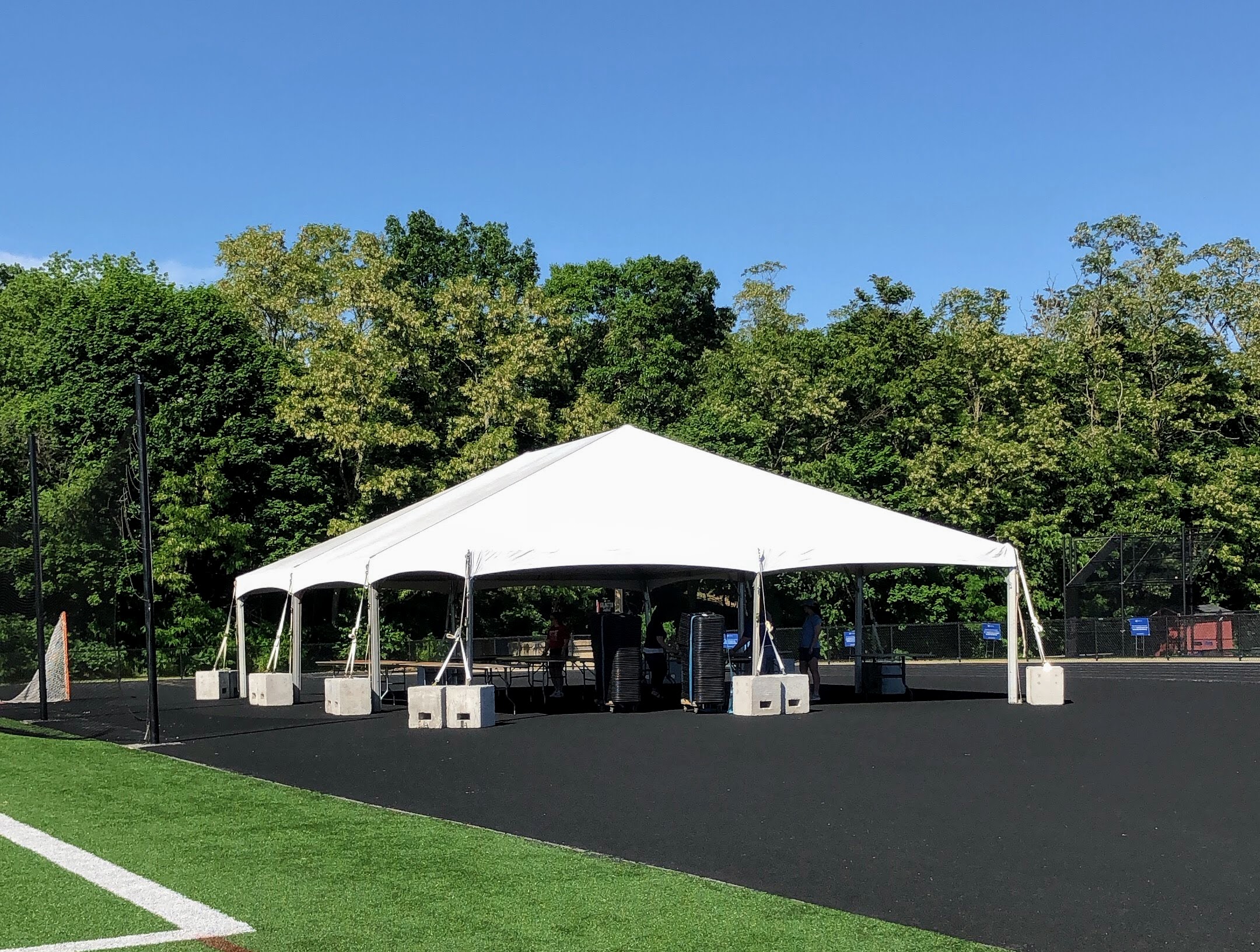
- Frame tents are secured using concrete ballast systems instead of stakes
- Hard surface tent installations usually cost more than grass installations
- Patio photos and measurements are very helpful during the planning process
- Raised patios, stairs, and slopes can affect setup logistics
- Frame tents require less clearance space than canopy or sailcloth tents
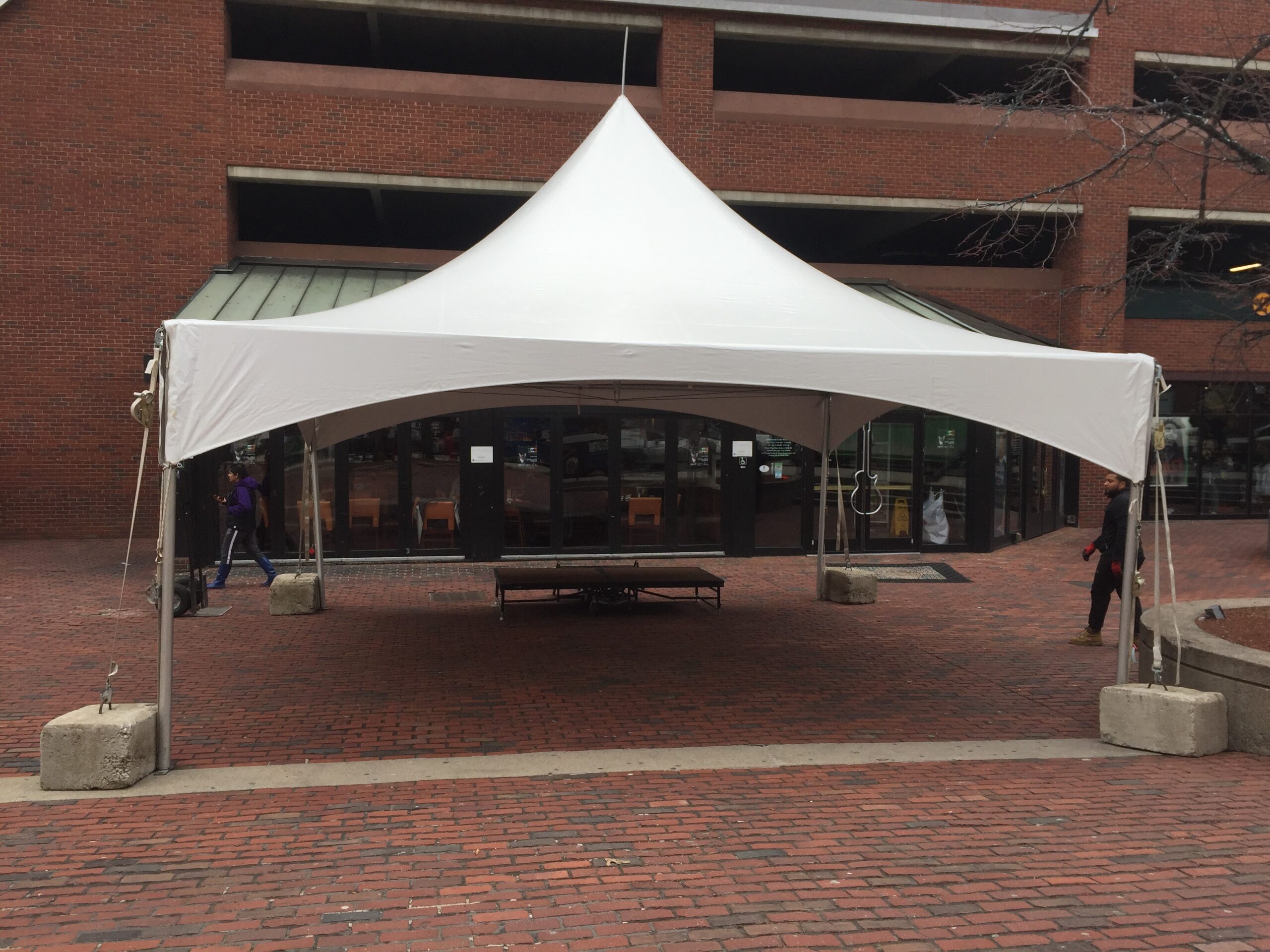
What Type of Tent Works Best on Pavement?
In most cases, a frame tent on pavement is the best option.
Frame tents work especially well on:
- patios
- parking lots and driveways
- brick
- concrete surfaces
Unlike canopy tents or sailcloth tents, frame tents do not rely on large staking areas or center poles to remain secure. Instead, they can be weighted using concrete ballast systems when staking is not possible.
Frame tents are also popular because they:
- have a clean, structured appearance
- work well in tighter spaces
- require less clearance around the tent footprint
- can be installed on many different surface types
Many of the larger outdoor events we support each year, including corporate events and festivals, use engineered frame tents because of their flexibility on hard surfaces.
You can learn more about frame tents here: What Is a Frame Tent?
Can Canopy Tents Be Installed on Pavement?
Sometimes, yes.
Canopy tents can occasionally be installed on pavement or asphalt if the client is comfortable allowing stakes to penetrate the surface. This process leaves holes behind afterward, which is important to understand before installation.
Because of this, canopy tents are usually best suited for grass and dirt.
Sailcloth tents are also intended for grass or dirt setups and are not able to be setup on patios.
If you are hoping to avoid penetrating the surface, a tent on pavement using a frame tent is the best option.
You can read more here:

How Are Tents Secured on Pavement or Concrete?
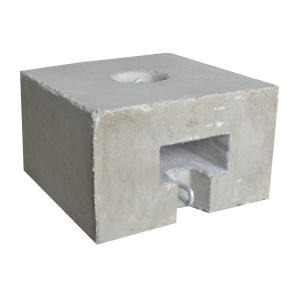
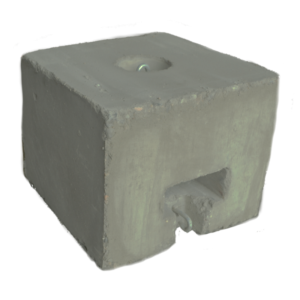
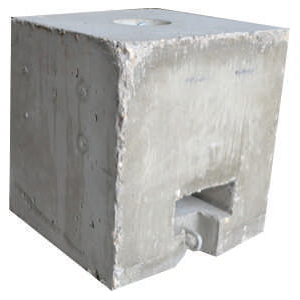
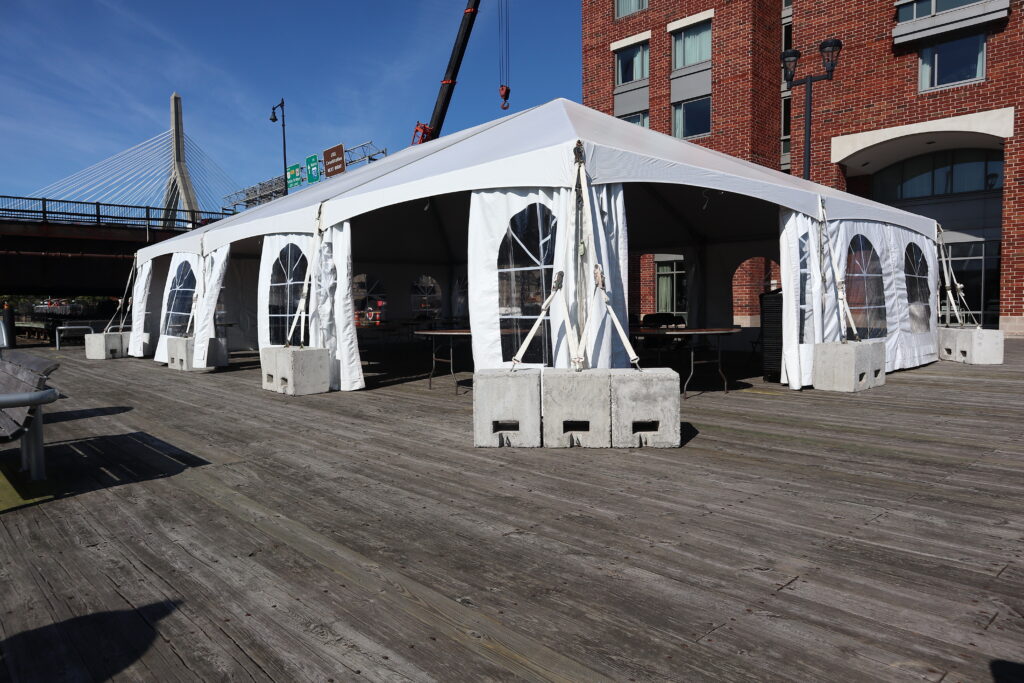
When tents cannot be staked into the ground, they are secured using concrete ballast systems.
These systems use large concrete blocks to safely secure the tent structure on hard surfaces.
Professional hard-surface tent installations are generally secured using ballast systems rather than water barrels. Proper tent anchoring is extremely important for safety, especially during wind or changing weather conditions. Water barrels are not the safest option for securing tents.
Why Tent Installations on Pavement Costs More
A tent on pavement or concrete setup is usually more expensive than a standard grass installation.
There are a few reasons for that:
- frame tents naturally cost more than canopy tents
- concrete ballast systems add additional labor and equipment
- setup logistics are usually more involved
- more trucking is involved to transport the heavy blocks
If you have the option to install a tent on grass, it is typically the more affordable route. But many homes, venues, patios, and parking lot setups simply work better on hard surfaces, and that’s very common.
What Surfaces Can Tents Be Installed On?
Tents are commonly installed on:
| Surface Type | Frame Tent | Canopy Tent | Sailcloth Tent |
|---|---|---|---|
| Grass / Dirt | ✅ | ✅ | ✅ |
| Pavement / Asphalt / Driveway / Parking Lot | ✅ | ⚠️ | ⚠️ |
| Concrete | ✅ | ❌ | ❌ |
| Patio | ✅ | ❌ | ❌ |
| Brick Surface | ✅ | ❌ | ❌ |
| Deck | ⚠️ | ❌ | ❌ |
| Gravel | ✅ | ⚠️ | ⚠️ |
| Beach Sand | ❌ | ❌ | ❌ |
| Over Pool | ⚠️ | ❌ | ❌ |
✅ = Able to be installed on this surface
⚠️ = Depends on site conditions — further discussion may be needed
❌ = Cannot be installed on this surface
Every setup space is different. Surface levelness, access, slope, stairs, surrounding clearance, and anchoring requirements can all affect what type of tent can safely be installed. Photos and measurements are always helpful when requesting a quote.
Why Photos Matter
Photos are always helpful when requesting a tent quote, but they become especially important when the tent is going on a patio, deck, driveway, pavement, or another surface that is not a standard open grass area.
A quick set of photos can help us understand:
- elevation changes
- stairs or steps
- surrounding landscaping
- nearby structures
- access paths for equipment
- how level the space is
- whether ballast systems may be needed
For example, a patio that sits level with the surrounding lawn is usually much easier to work with than a raised patio with stairs or retaining walls around it.
Photos also help us determine:
- what tent styles may work best
- how the tent can safely be secured
- what size tent may fit comfortably
- whether additional planning may be needed
Even simple cell phone photos from a few different angles can make a huge difference during the planning process and help us provide more accurate recommendations for your event.
How Much Space Does a Tent Need?
Different tent styles require different amounts of clearance space around the tent footprint.
General guidelines are:
- Frame tents: 5 additional feet beyond the tent size
- Canopy tents: 10 additional feet beyond the tent size
- Sailcloth tents: 12 additional feet beyond the tent size
That difference matters a lot when working with patios, driveways, and tighter backyard spaces.
Planning a Tent on Pavement or a Patio
If you’re planning a tent on pavement, concrete, or a patio, the best thing you can do is gather:
- measurements of the space
- photos of the setup area
- information about stairs or slopes
- your guest count
That helps us quickly determine:
- what tent options will work
- the safest installation method
- layout possibilities
- space requirements
At Baystate Tent & Party, we help clients with patio and pavement tent installations all the time, from backyard parties to large corporate events. If you’re unsure what type of tent setup makes the most sense for your space, our team is always happy to help walk through the options and recommend the best fit for your event.
Check out our socials to see more!

Wedding Whisperer | Dog Mom | Creative Enthusiast
Samantha has been an integral part of the Baystate Tent & Party team since 2016, combining a lifelong passion for weddings and special events with years of hands-on experience in the event rental industry. She loves helping clients bring their vision to life, balancing creative design with thoughtful planning and attention to detail to create celebrations that feel effortless. Known for building lasting relationships with her clients, Samantha believes every event is unique and enjoys guiding couples through the planning process with honesty, organization, and genuine excitement for their big day. When she’s not talking tents and timelines, Samantha is a true lake girl who enjoys spending time with her black lab, Frankie, soaking up the sunshine, and getting lost in a good romance novel.