
What’s the Difference Between a Sailcloth and a Canopy Tent?
If you’ve been looking at tent options for your wedding or event, you may have found yourself wondering: what’s the difference between a sailcloth and canopy tent?
We get this question ALL the time, and we understand why!
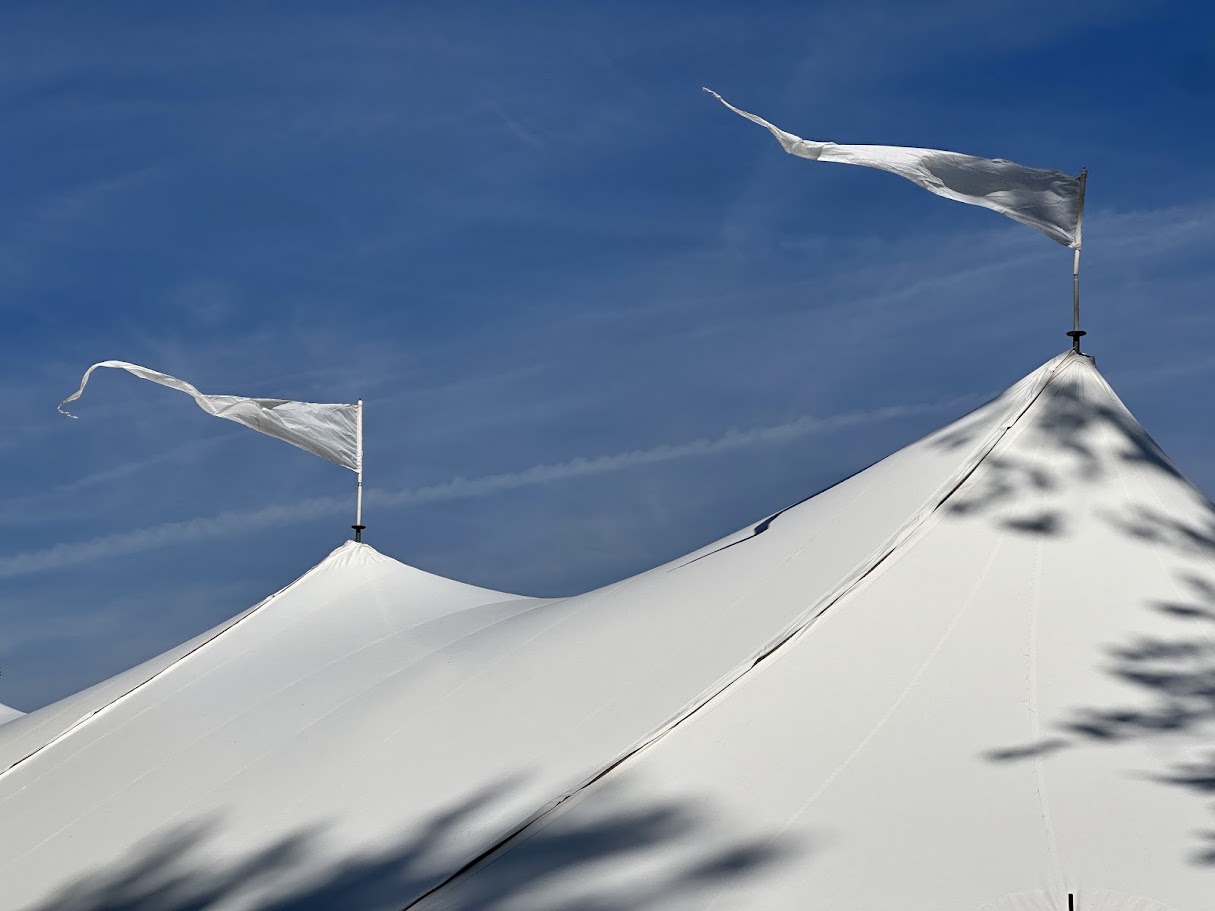
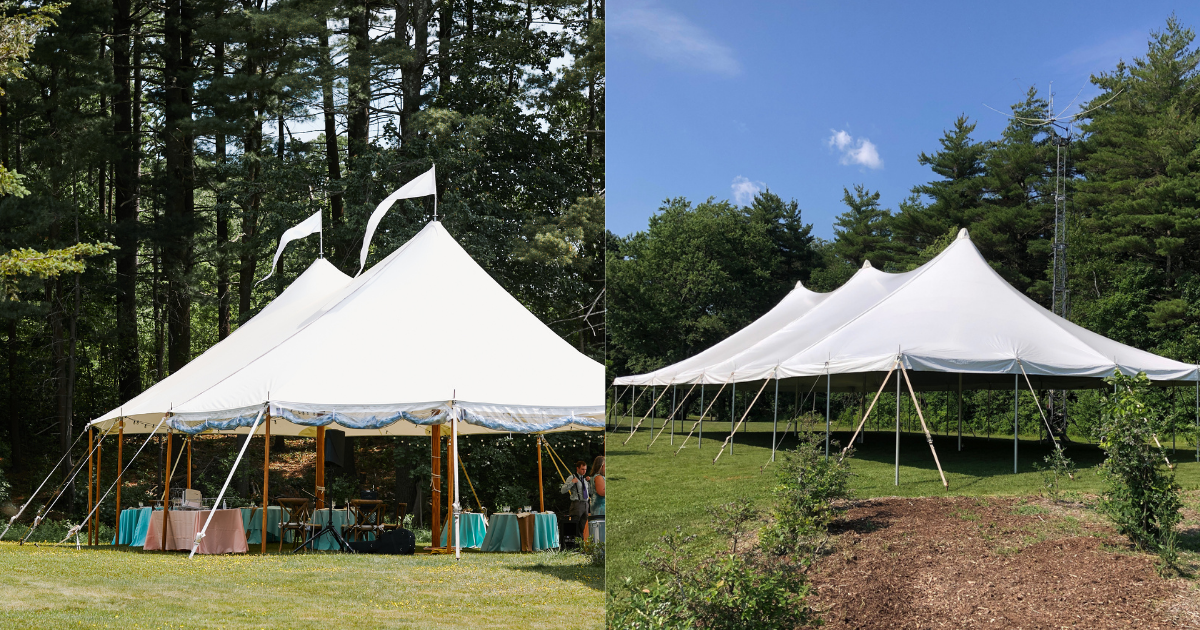
From a distance or in certain exterior photos, sailcloth and canopy tents can look pretty similar. They’re both white pole-style tents, they both have center poles that create those recognizable peaks, and they both need to be staked into the ground.
But once you get closer — and especially once you step inside — they are very different tents.
The easiest way we’ve explained it? A canopy and a sailcloth are kind of like a donkey and a zebra. Similar basic anatomy, VERY different look.
A sailcloth tent has real wood poles, a slightly translucent ivory-white sailcloth vinyl top and rounded edges. A canopy tent has aluminum poles, a standard white block-out vinyl top and straight edges. Even the sidewalls function differently.
And all of those little differences add up to two tents with completely different personalities.
TL;DR: Sailcloth vs. Canopy Tent
- Sailcloth: real wood poles, ivory-white translucent vinyl and rounded edges
- Canopy: aluminum poles, white block-out vinyl and straight edges
- Both have center poles and must be staked
- Sailcloth lets natural and artificial light filter through the top; canopy blocks it
- Sailcloth is the more expensive option; canopy is more budget friendly
- Both can be beautiful choices for weddings and events — it really comes down to your vision, site and budget
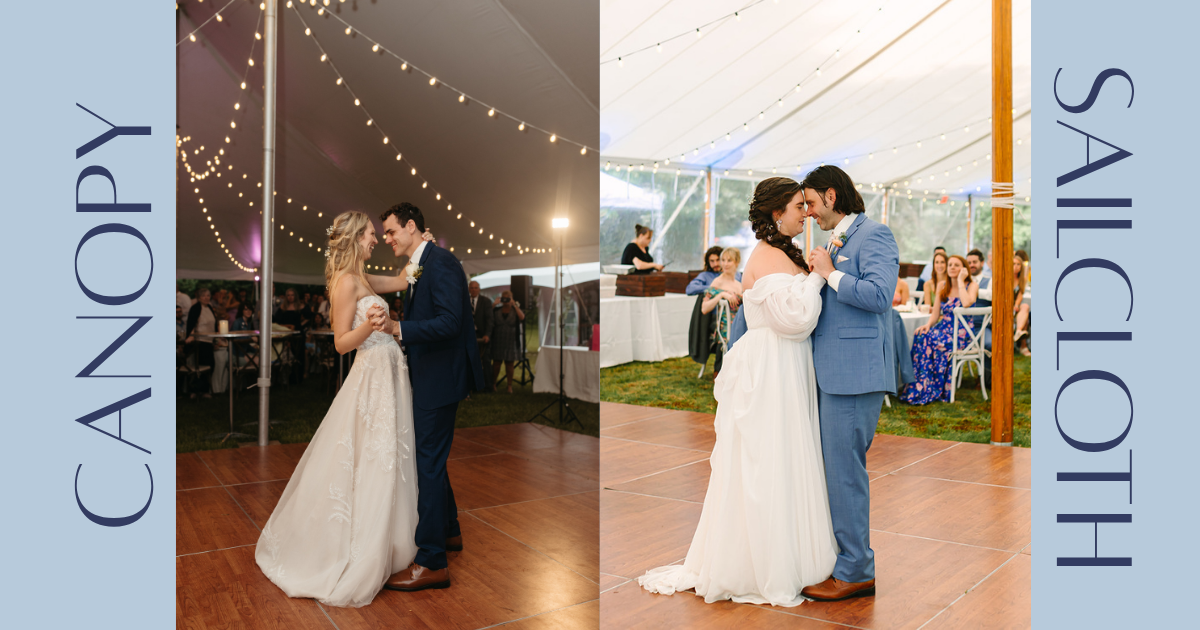
What Is the Difference Between a Sailcloth and Canopy Tent?
The biggest difference between a sailcloth and canopy tent is in the materials and overall construction. At Baystate Tent & Party, our sailcloth tents feature real wood poles, a slightly translucent ivory-white sailcloth vinyl top and rounded edges. Our canopy tents use aluminum poles, a white block-out vinyl top and straight edges.
Both are pole tents. Both have peaks. Both have center poles. Both require staking. Both can accommodate dance floors, tables, chairs, bars, lighting and other event rentals.
But aesthetically? They’re VERY different.
Canopy (Left), Sailcloth (Right)
| Sailcloth Tent | Canopy Tent | |
|---|---|---|
| Tent Top | Sailcloth vinyl | White block-out vinyl |
| Color | Soft ivory-white | Standard white |
| Poles | Real wood | Aluminum |
| Edges | Rounded (Oval) | Straight (Rectangle) |
| Natural Light | Filters through the top | Blocked by the top |
| Nighttime Lighting | Light creates a visible glow through the top | Light does not show through the top from outside |
| Sidewalls | Clear + roll up and down | Solid, French window or clear + clip on/off |
| Staking | Required | Required |
| Extra Staking Space | 12′ around tent | 10′ around tent |
| Center Pole Spacing | 20′ | 15′ on 30’x canopy; 20′ on larger sizes |
| Side Pole Spacing | 10′ | 7.5′ on 30’x canopy; 10′ on larger sizes |
| Price | More expensive | More budget friendly |
| Overall Look | Soft, warm and elevated | Clean, classic and versatile |
These specifications are based on Baystate Tent & Party’s inventory. Tent construction and specifications can vary between rental companies and manufacturers.
Why Do Sailcloth and Canopy Tents Look Different?
One of the biggest reasons people don’t immediately understand the difference between a sailcloth and canopy tent is because they’re usually looking at them online.
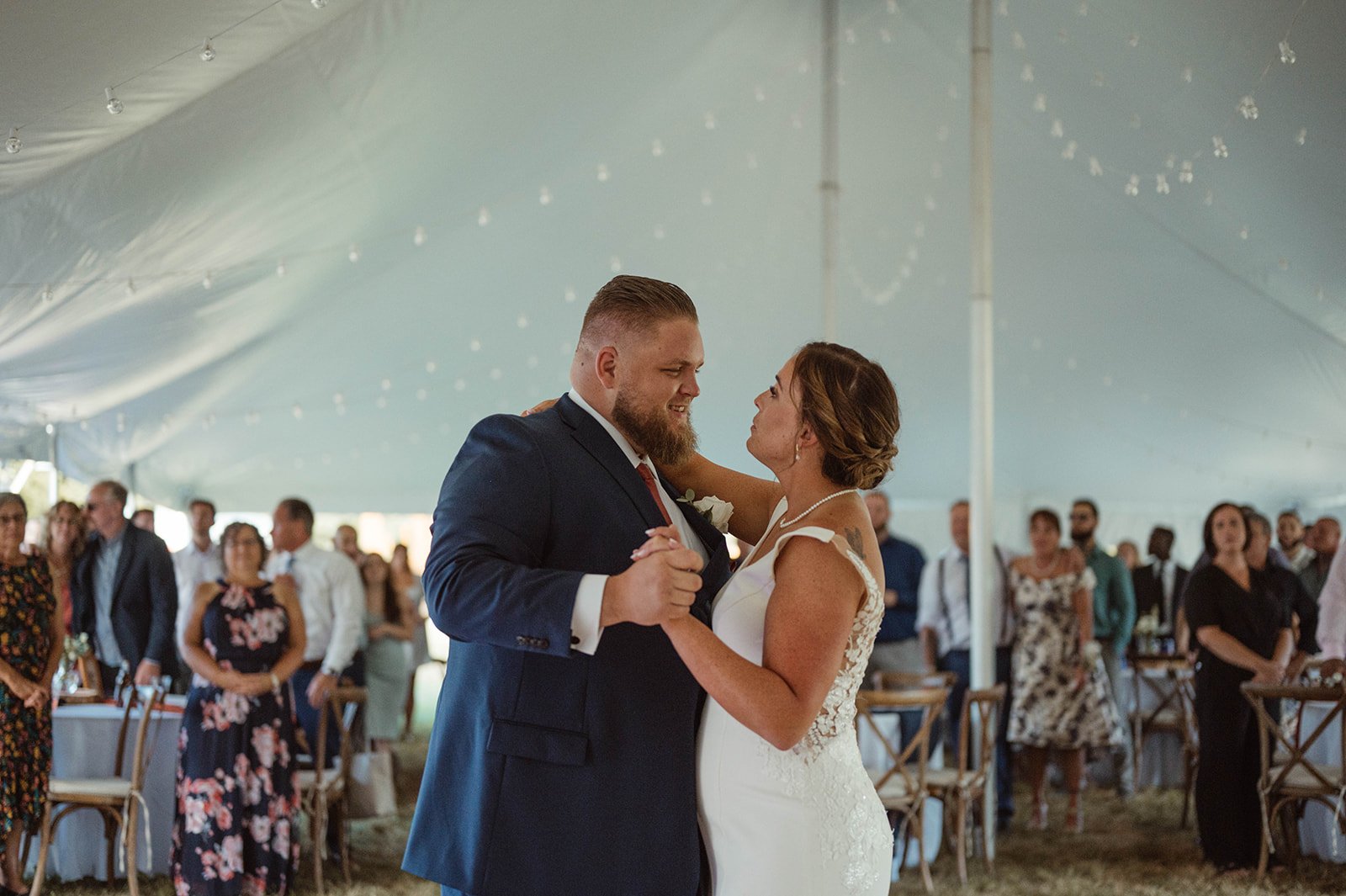
From 100 feet away in a wedding photo? We get it. White tent. Peaks. Center poles. They can look similar.
An interior photo is a completely different story.
Sailcloth Tent
Real Wood Poles vs. Aluminum Poles
One of the most obvious differences once you’re inside is the poles.
Our sailcloth tents have real wood center poles and side poles. The natural wood is part of the overall look of the tent and is one reason sailcloth is especially popular for weddings.
Our canopy tents use aluminum center and side poles, giving them a cleaner and more traditional event-tent appearance.
Neither is inherently better — they simply create different looks.
If you’re going for a softer, more natural aesthetic, the wood poles of a sailcloth can become part of the design without you doing anything to them. If you want a classic white tent that acts as more of a blank canvas, canopy is a great option.
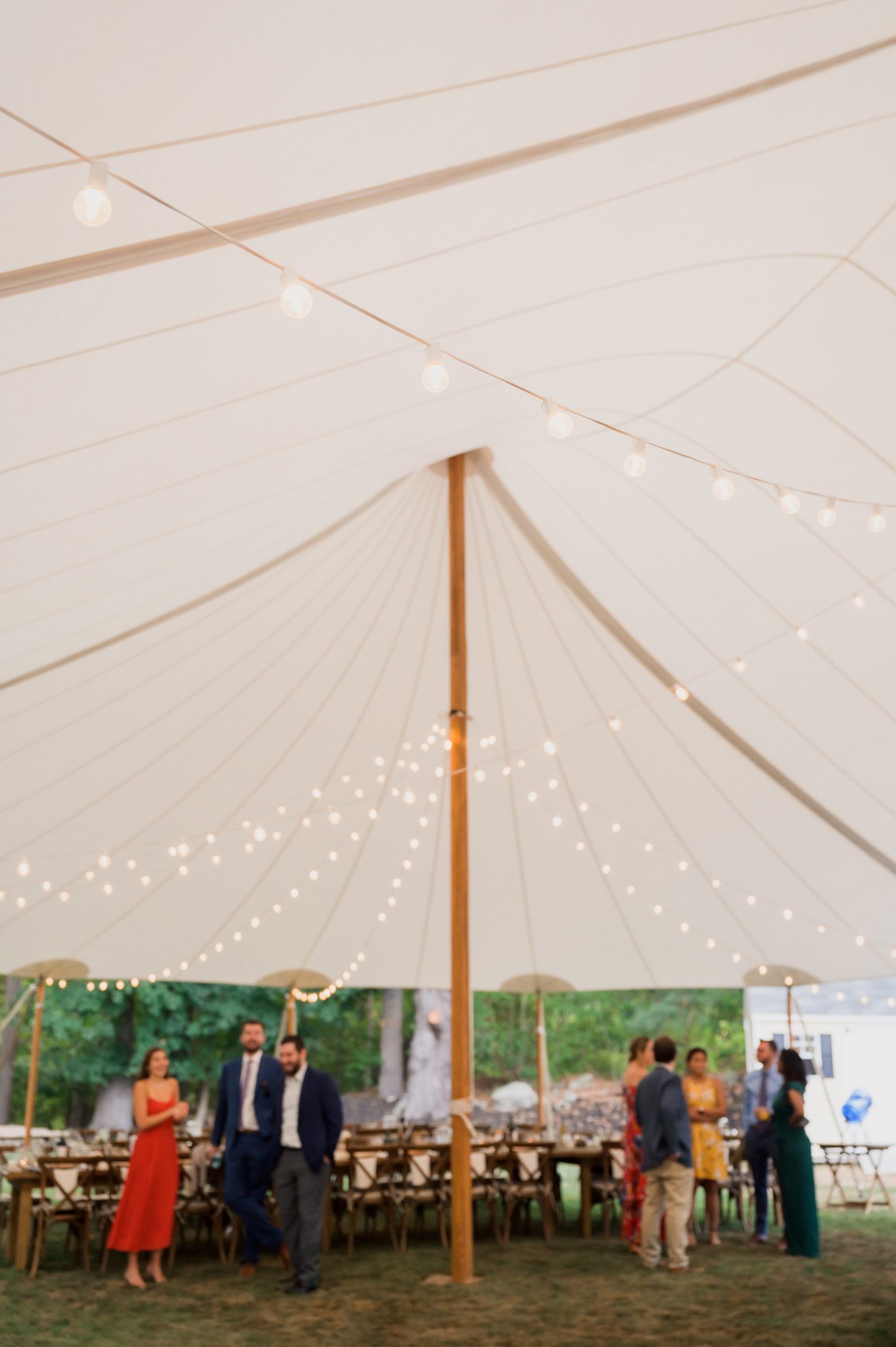
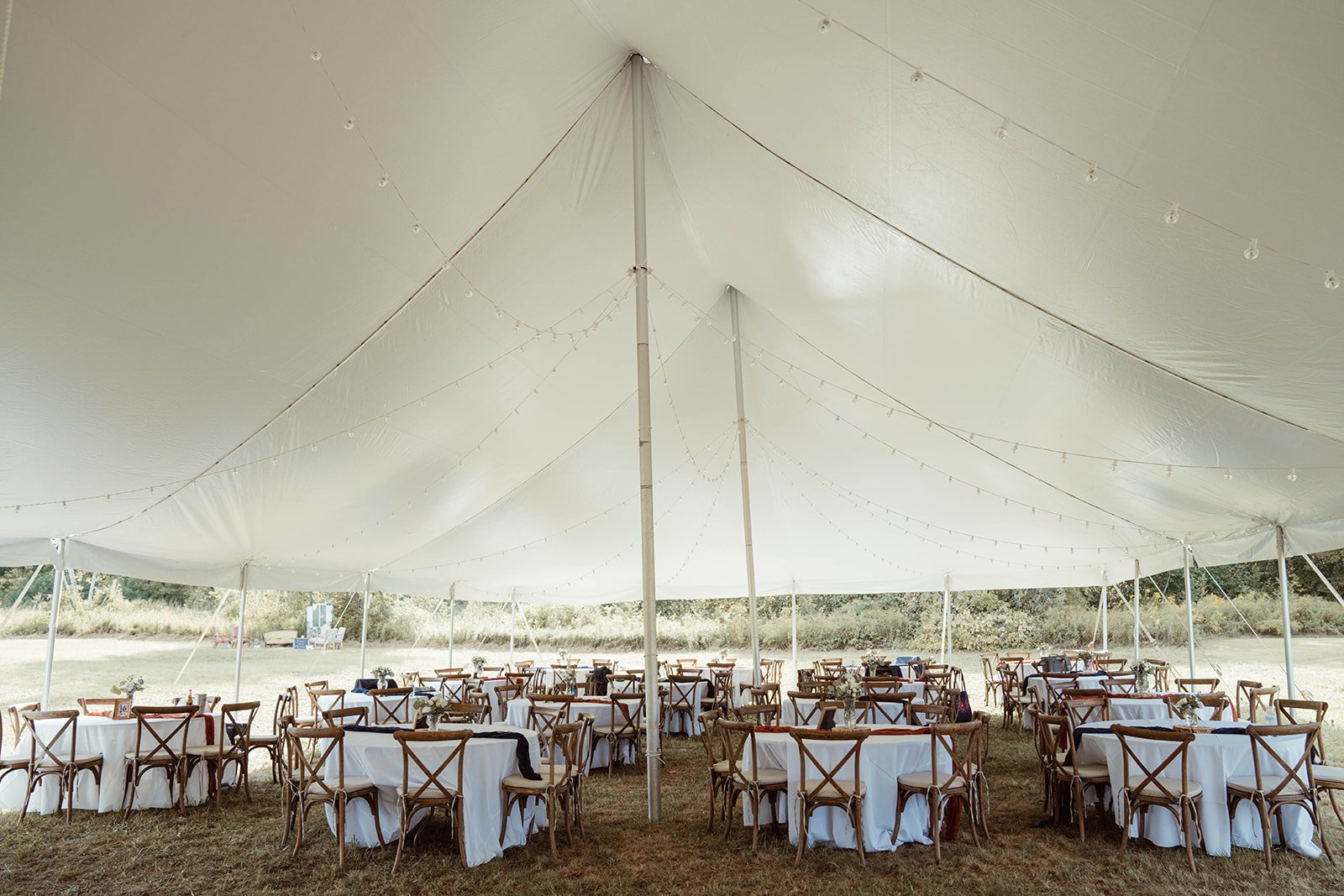
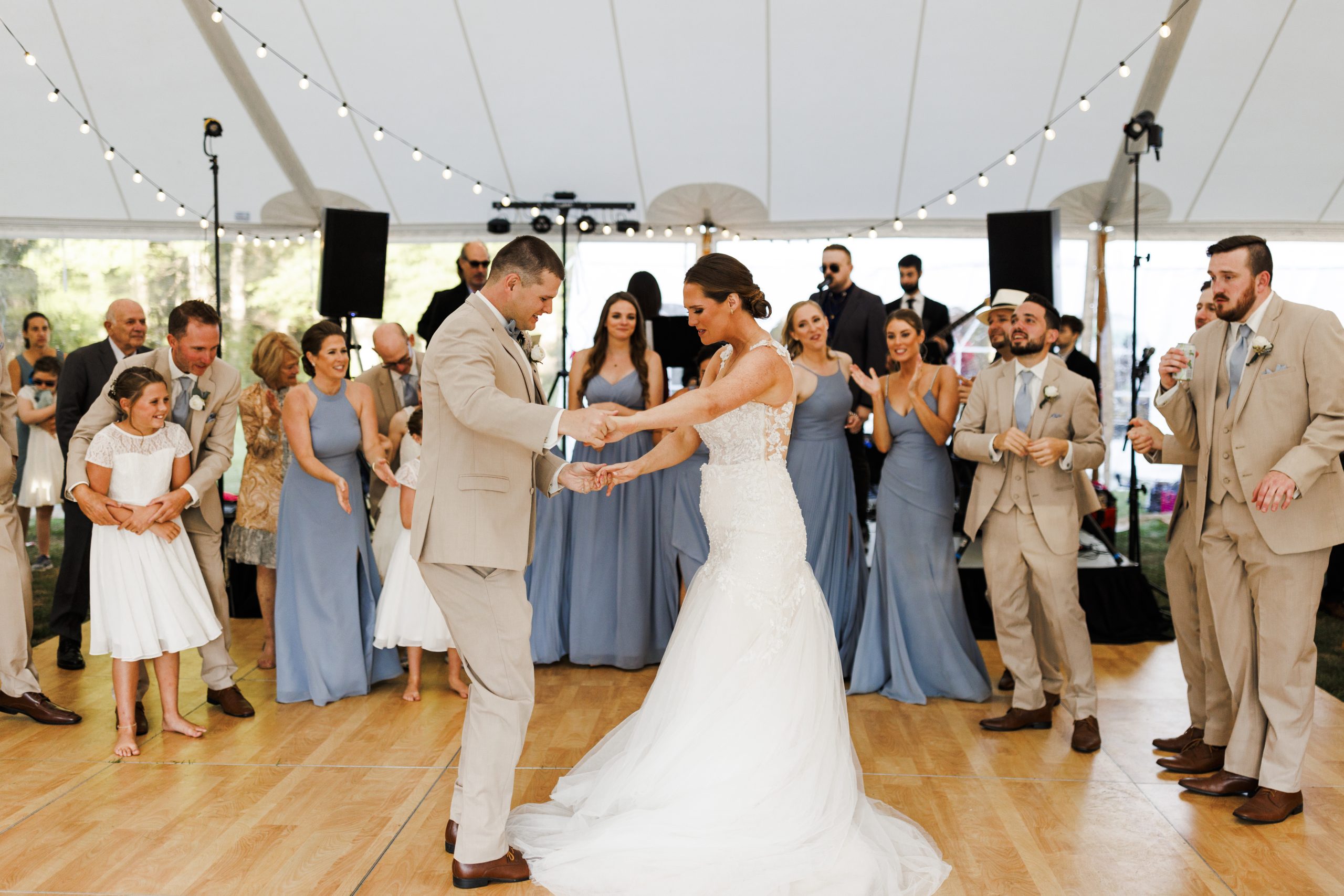
Sailcloth (Left), Canopy (Right)
Sailcloth vs. Canopy Tent Tops: The Material Makes a BIG Difference
The top might actually be the biggest visual difference between a sailcloth and canopy tent.
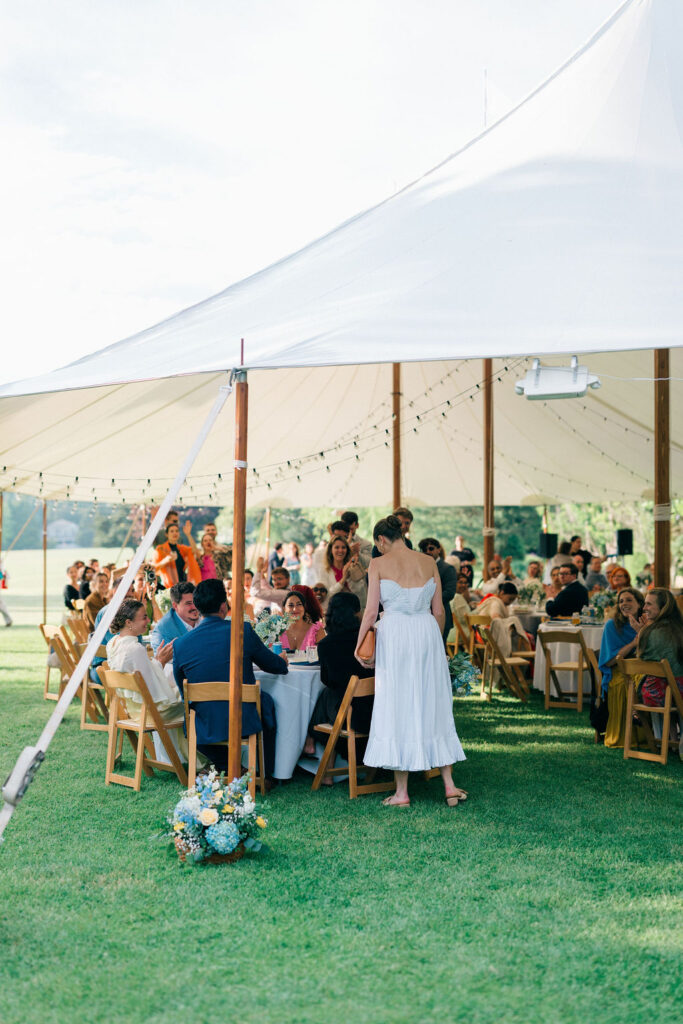
Baystate’s sailcloth tents use a slightly translucent sailcloth vinyl that appears more ivory-white than bright white. Natural light filters through the material rather than being completely blocked.
Think of it almost like a lampshade.
The material isn’t see-through, but light filters through it and creates a softer glow inside the tent.
Our canopy tents use a standard white block-out vinyl. Instead of filtering the light, the top blocks it — more like pulling down a window shade.
During the day, that changes the quality of light underneath the tent.
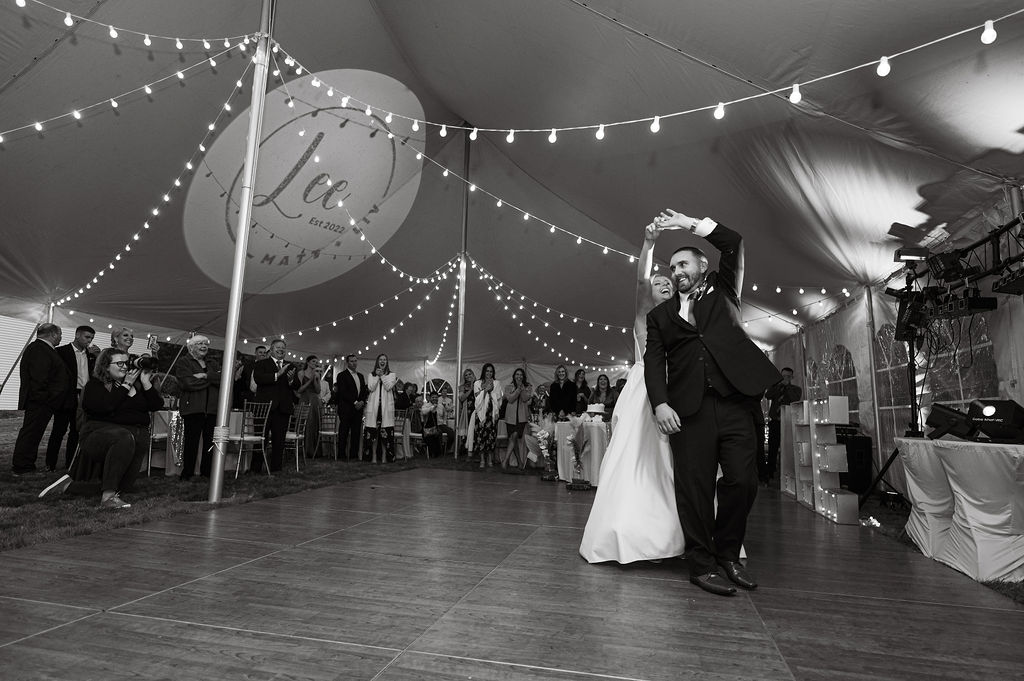
At night, the difference becomes even more noticeable.
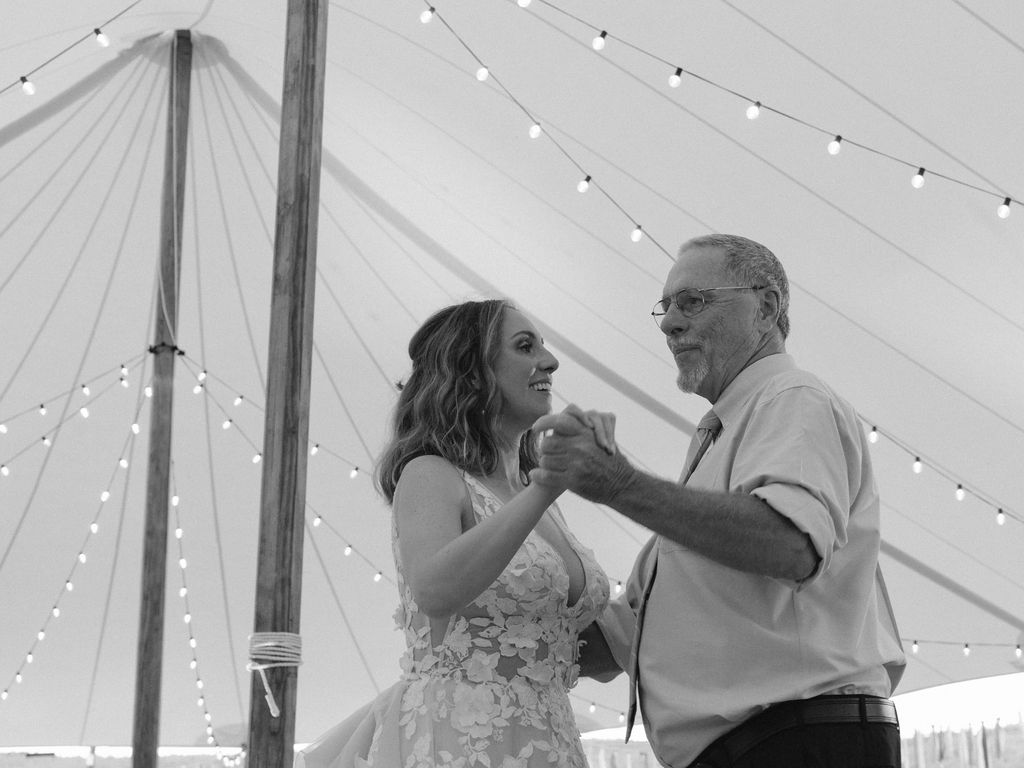
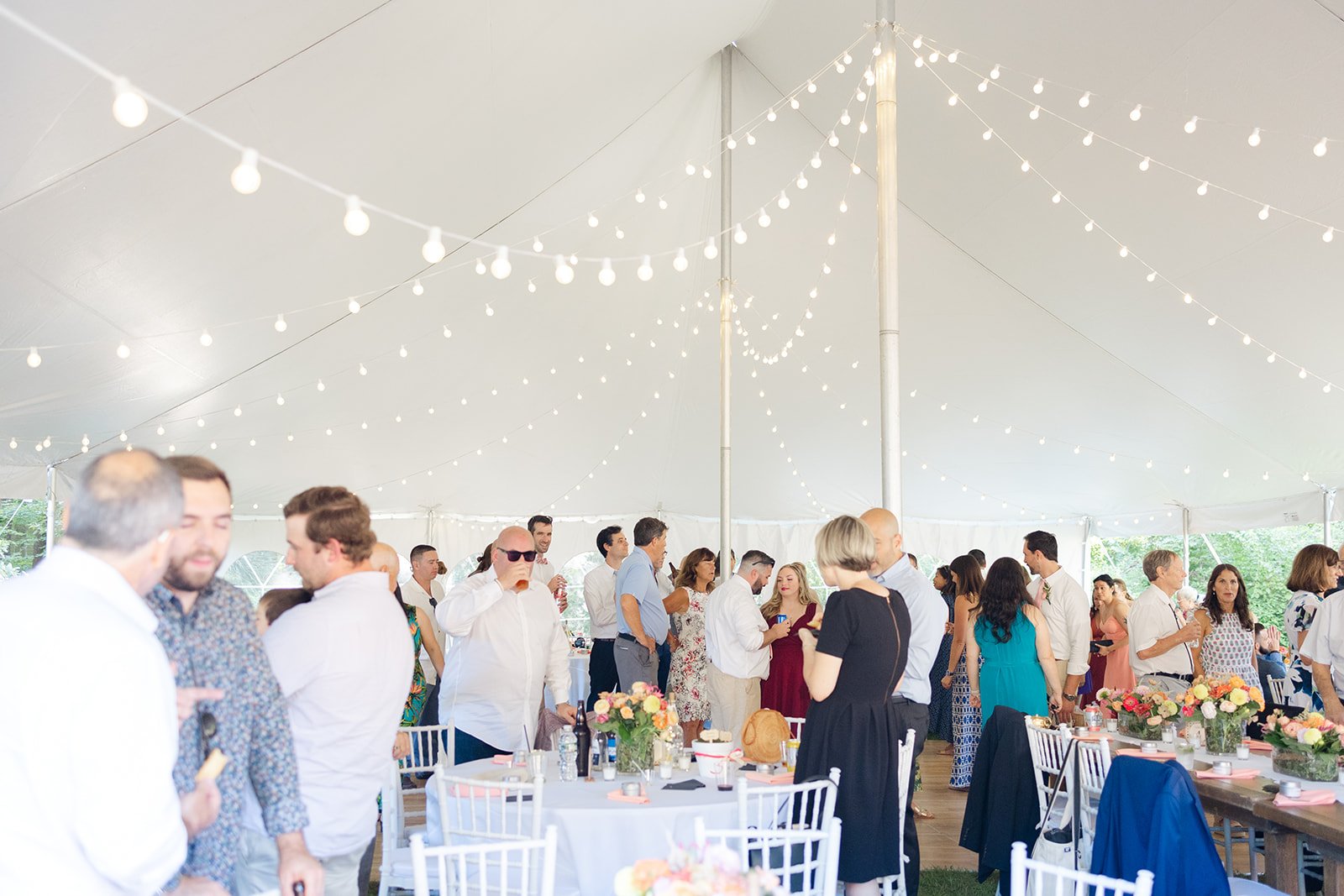
Sailcloth (Left), Canopy (Right)
Do Sailcloth Tents Glow at Night?
They do — and this is one of our FAVORITE things about them.
Because the sailcloth vinyl allows light to filter through, the lighting inside the tent can actually illuminate the top. From outside, you can see the tent glowing.
Add bistro lights or other lighting inside and the entire tent takes on this really warm, soft appearance after dark.
With Baystate’s canopy tents, the white block-out vinyl doesn’t allow the interior lighting to show through the top in the same way. The lighting still creates a beautiful atmosphere inside the tent, but you don’t get that same exterior glow.
Both sailcloth and canopy tents can accommodate our bistro lighting, so this isn’t a question of whether you can light one or the other. It’s about how the tent top interacts with that light.
This is also one of those differences that photographs don’t always do justice. Seeing a fully illuminated sailcloth tent in person is a completely different experience.
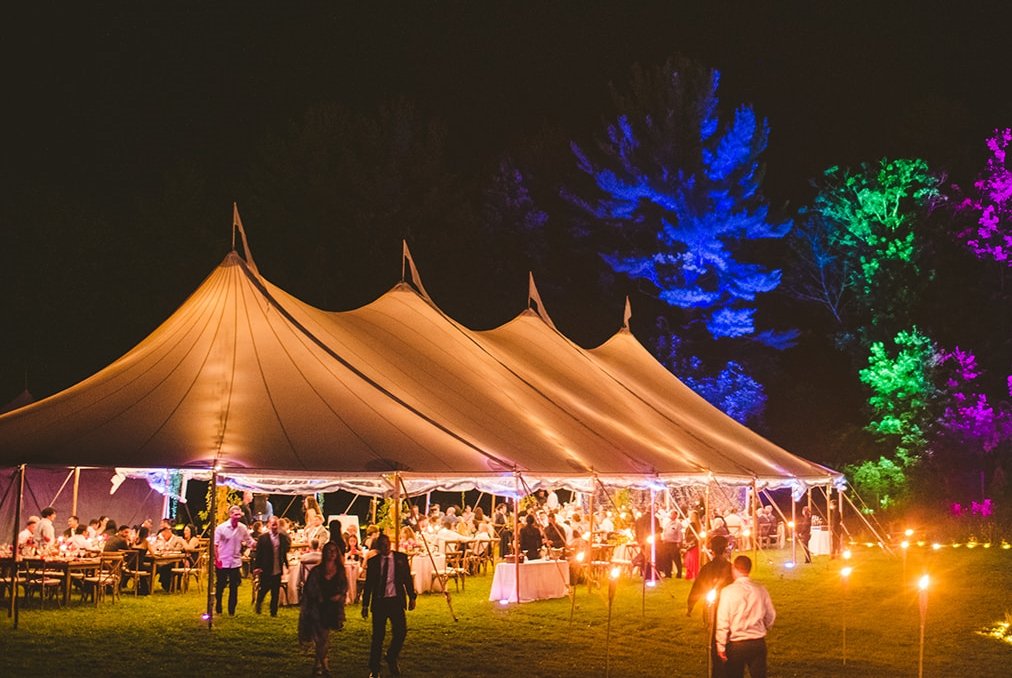
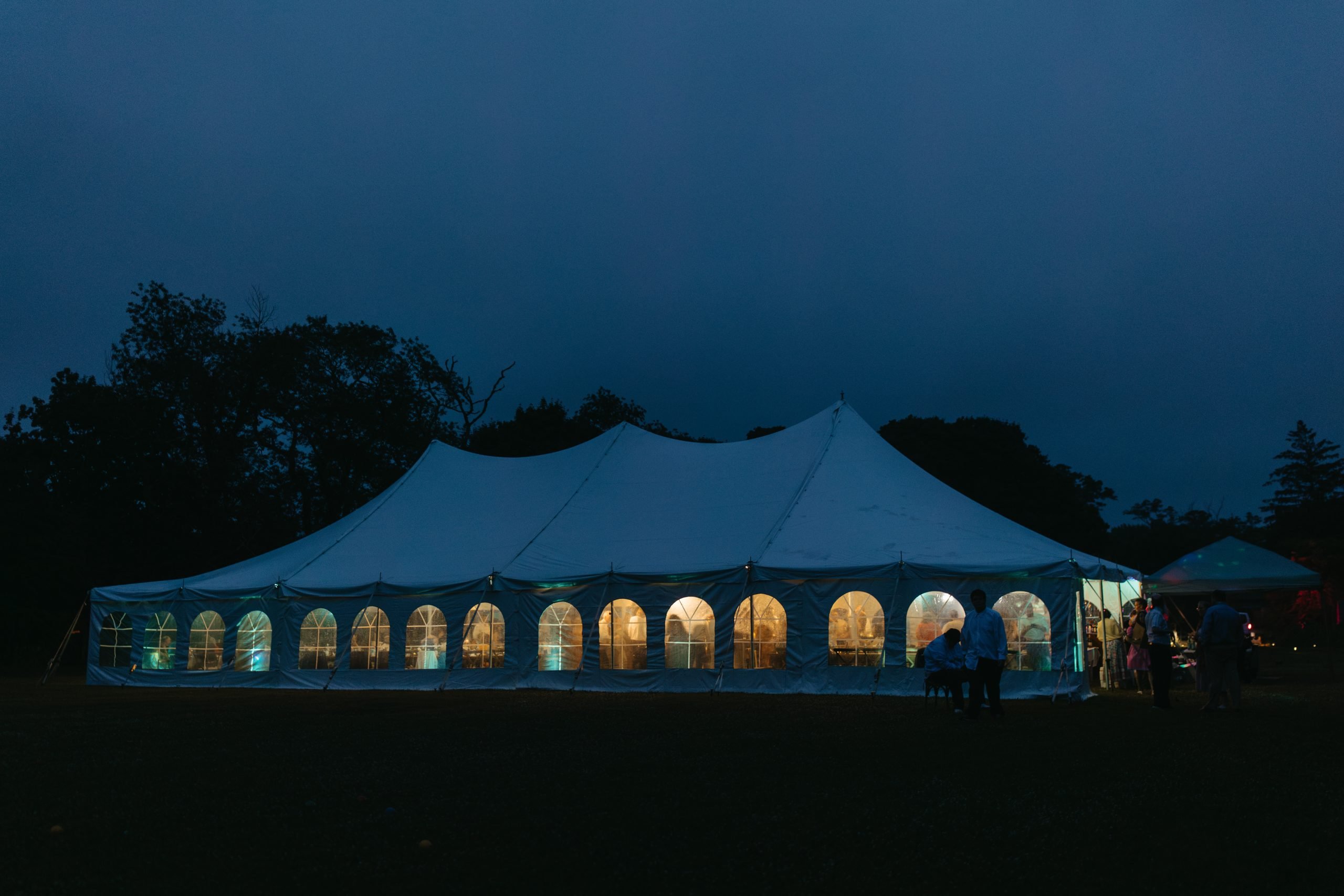
Sailcloth (Left), Canopy (Right)
What’s the Difference Between Sailcloth and Canopy Sidewalls?
Here’s a difference people don’t usually think about until they’re actually planning their event: the sidewalls work differently.
And we’re partial to our sailcloth walls for this exact reason.
Sailcloth Sidewalls
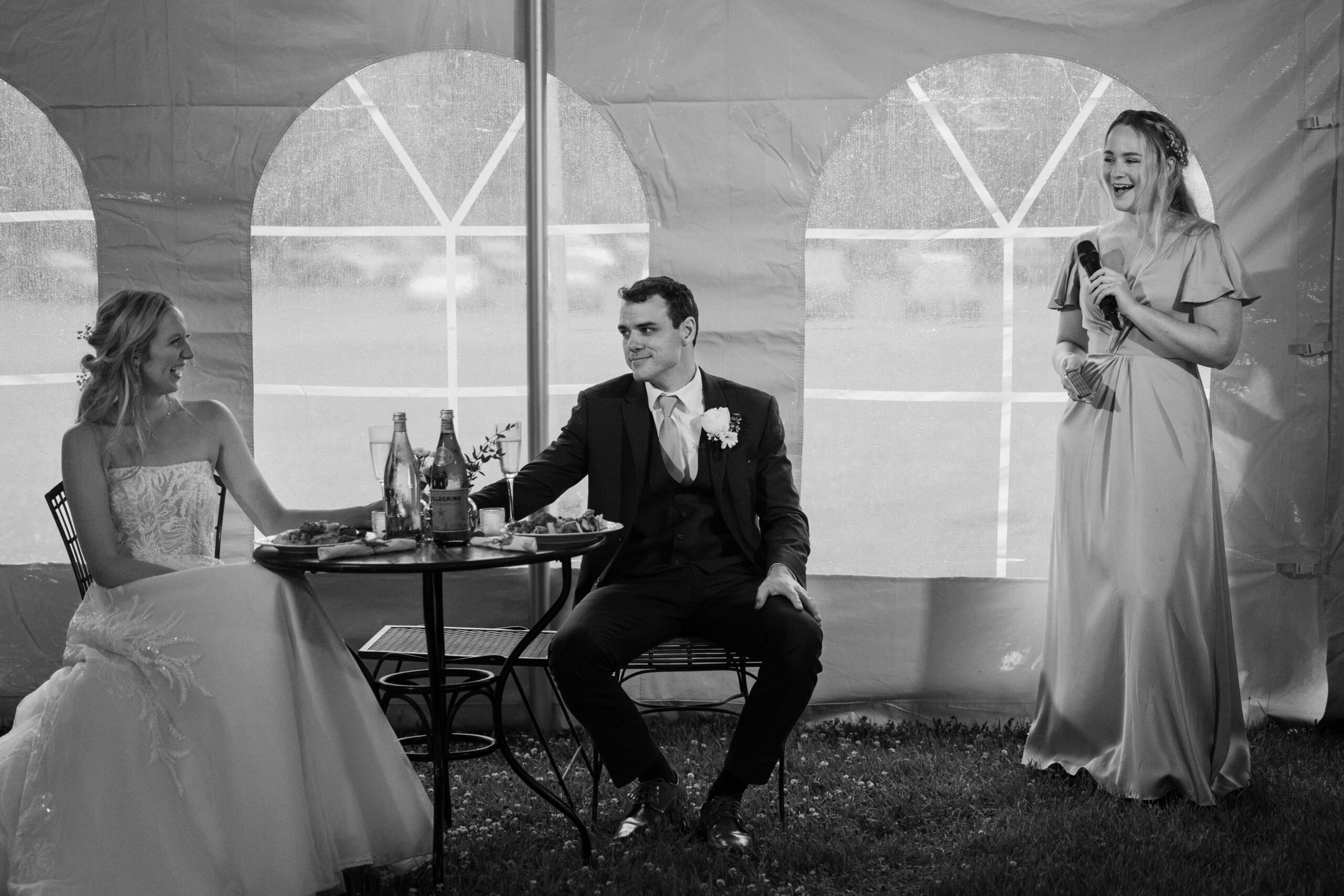
Our sailcloth tents use clear roll-up sidewalls.
If it starts raining, they can be rolled down. If the weather clears up, they can be rolled right back up.
That flexibility is incredibly convenient during a wedding or event when New England weather decides to change its mind halfway through the day.

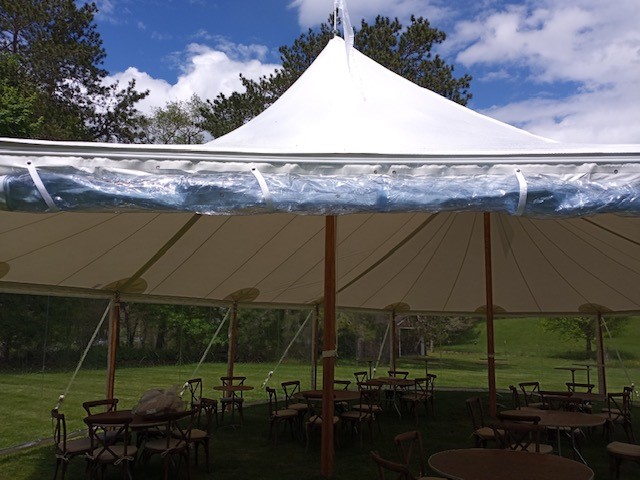
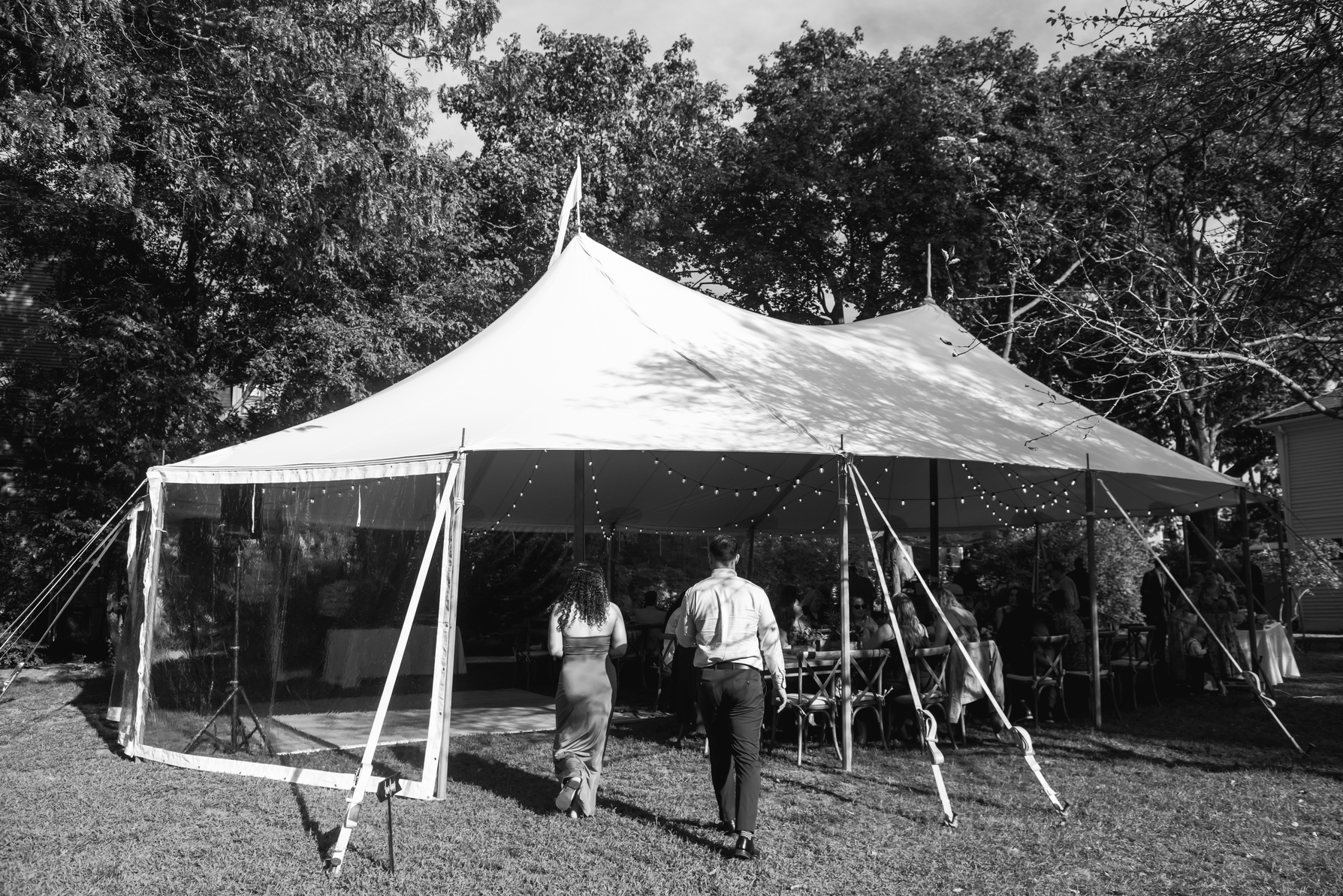
Canopy Sidewalls
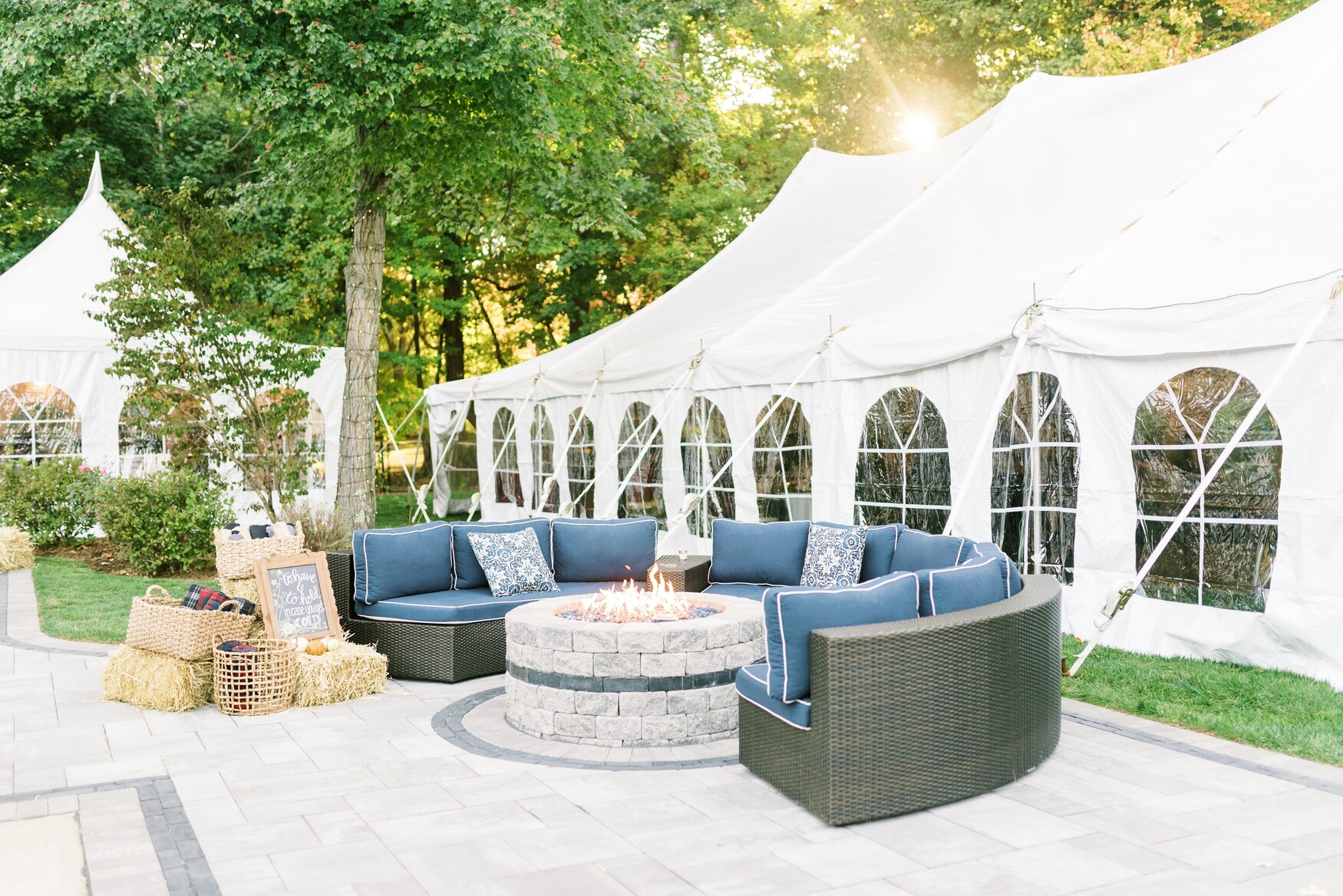
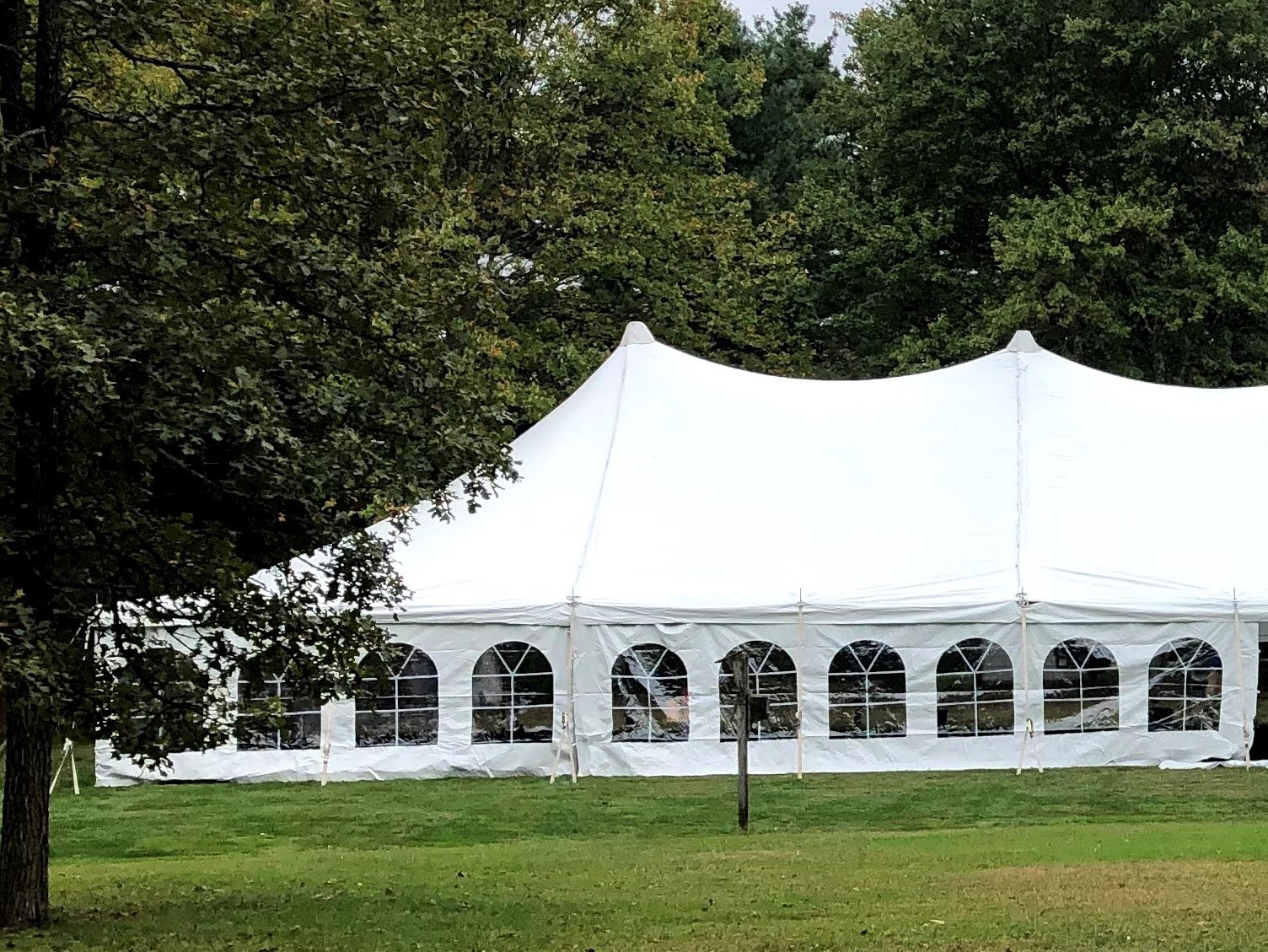
Canopy tents have more options when it comes to the look of the walls. Baystate offers:
- Clear
- French window
- Solid white
However, canopy walls don’t roll or slide. They clip onto a perimeter rope and are installed in individual sections — typically 15′, 20′ or 30′ depending on the size of the tent. Each panel is either on or off.
Again, neither system makes one tent universally better than the other, but it’s an important functional difference between a sailcloth and canopy tent that isn’t obvious from a photo.
Is a Sailcloth Tent More Expensive Than a Canopy Tent?
Yes. Sailcloth is generally more expensive than a comparable canopy tent.
At Baystate, the difference isn’t necessarily outrageous, but it’s absolutely something worth considering when you’re deciding where you want to allocate your event budget.
The sailcloth vinyl, real wood poles, rounded perimeter and overall construction create a noticeably different finished tent. And sometimes that means you can actually do less decorating.
A sailcloth already brings a lot to the design on its own. The wood poles, softer top and rounded edges are part of the look before you’ve added a single flower, chandelier or piece of draping.
A canopy gives you more of a clean, classic foundation. Depending on your vision, you might leave it exactly as it is, or you might decide to transform it with draping, lighting, florals or other décor.
If budget is a major consideration, canopy is one of our favorite ways to get a classic tented event while leaving more room in the budget for flooring, lighting, flowers, entertainment, food or whatever else matters most to you.
Is a Sailcloth Tent Worth It for a Wedding?
If the tent itself is an important part of your wedding design, we think a sailcloth tent is absolutely be worth the upgrade.
Sailcloth tents are incredibly popular for weddings because they don’t need much added décor to make an impact. They already have the real wood poles, soft ivory-white top, rounded perimeter and that beautiful glow once the lights come on.
Our Rustic Collection is especially popular under sailcloth tents, but you’re certainly not limited to a rustic look. Both sailcloth and canopy tents can work with virtually any style of tables, chairs, linens, dance floors and other rentals.
And we see it happen all the time: a client isn’t 100% sure about the difference in photos, but once their tent is installed and they actually walk underneath the sailcloth, they’re blown away. The difference is much easier to appreciate in person!
That doesn’t mean a canopy isn’t a great wedding tent — it absolutely is. If choosing a canopy allows you to put more of your wedding budget toward a dance floor, food, flowers, entertainment or something else that’s more important to you, that’s a pretty good trade-off!
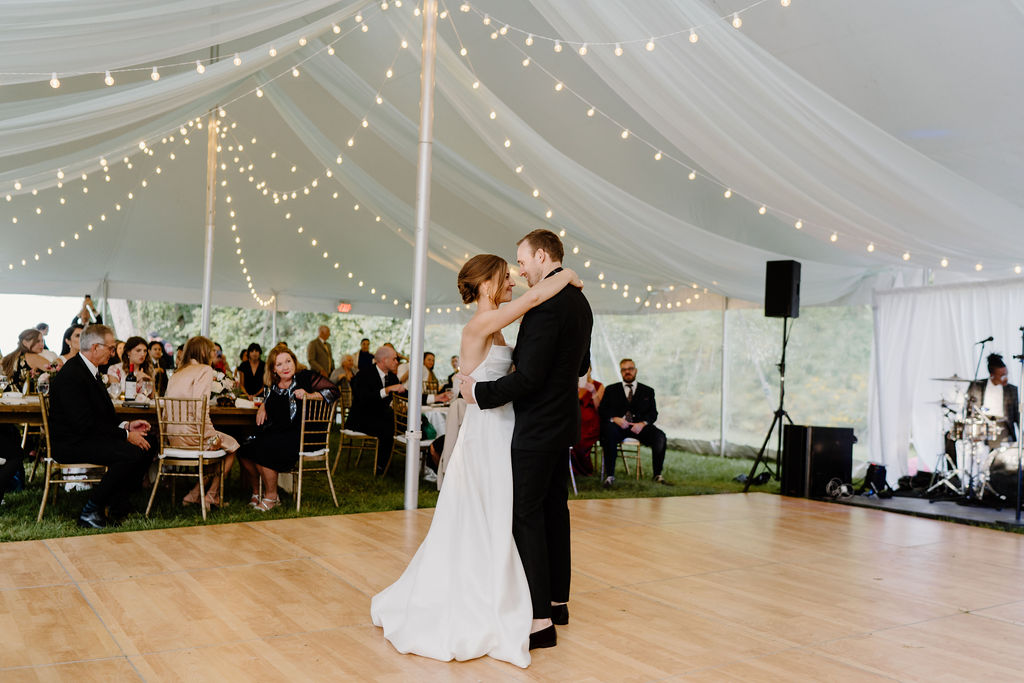
Canopy Tent with drapery
Our Take
If budget weren’t a factor? Sailcloth. Every time.
There’s just something about seeing a sailcloth completely installed — especially once the lights come on at night — that photos don’t fully capture. It’s already beautiful before you do much of anything to it.
But I would never tell someone they need sailcloth to have a beautiful tented wedding. Canopy is classic, clean, versatile and more budget friendly. They’re simply two different tents — and that’s the whole point of this article!
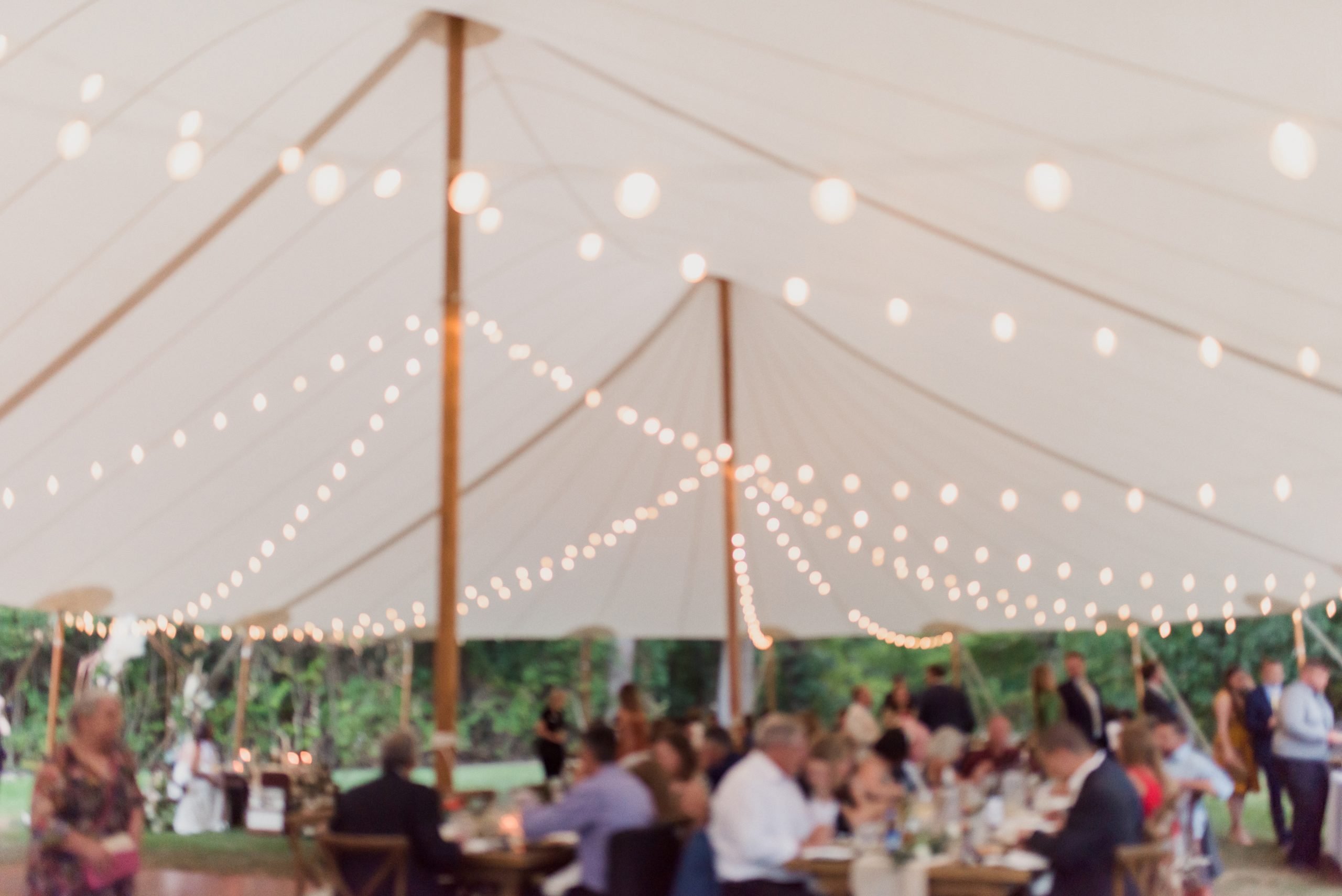
Sailcloth Tent
Do Sailcloth and Canopy Tents Both Have Center Poles?
Yes. Both sailcloth and canopy tents have center poles. This is another reason the two can look similar from a distance.
At Baystate, our 32′ and 44′ wide sailcloth tents have center poles every 20 feet and side poles every 10 feet.
Center-pole spacing varies a little more with our canopy inventory:
- 30′ wide canopy tents have center poles every 15 feet and side poles every 7.5 feet
- Larger canopy tents have center poles every 20 feet and side poles every 10 feet
Why should you care?
Your layout!
Center-pole spacing can affect where we position a dance floor, tables, bars and other major elements underneath the tent. For example, the 15′ center-pole spacing of a 30′ wide canopy can influence the size and placement of a dance floor differently than the 20′ spacing of a larger canopy or sailcloth.
This is one of the many reasons we don’t choose a tent based solely on guest count. Your entire event layout matters.
If having no center poles at all is important to your vision, we’d recommend looking at a frame tent or structure instead.
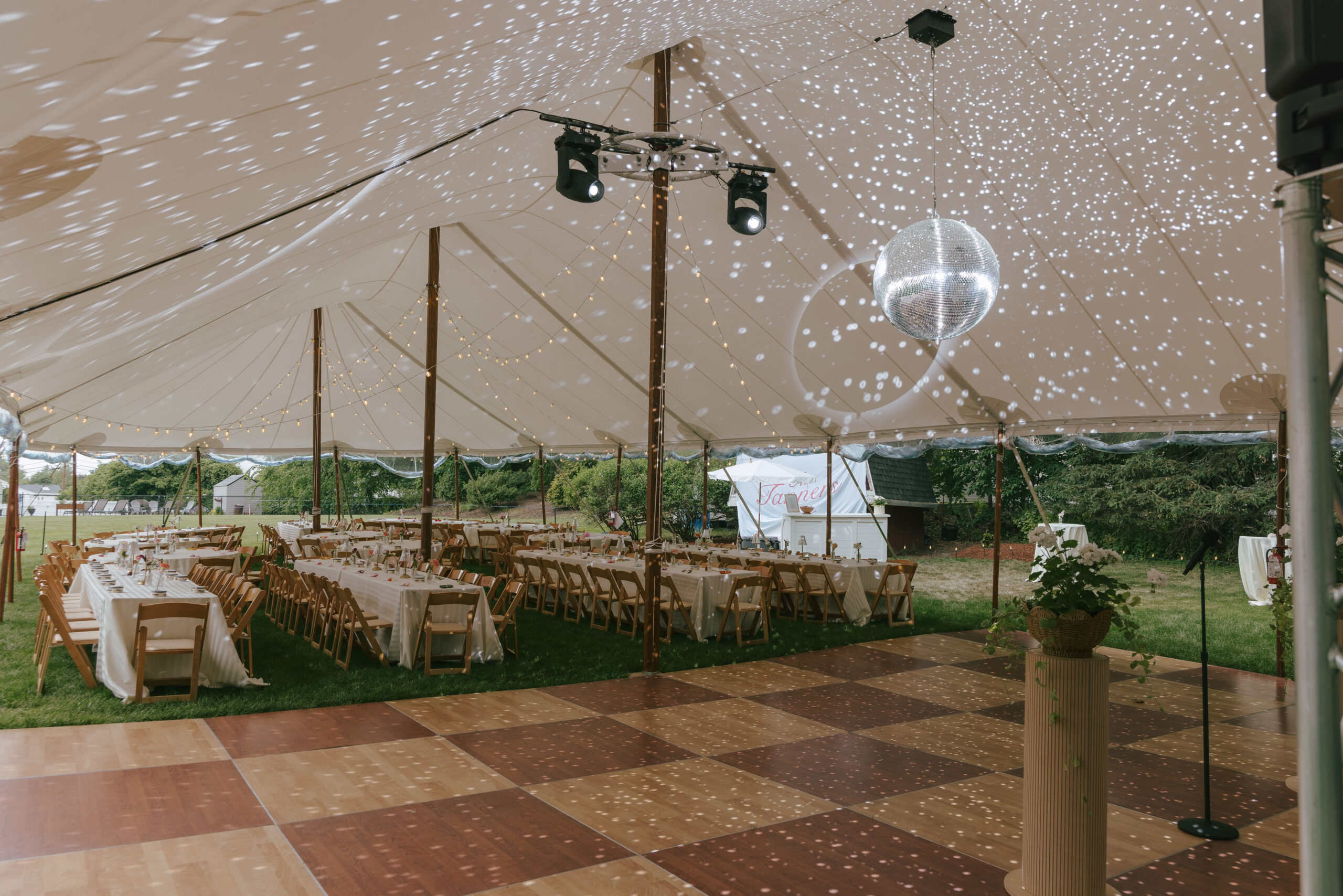
Sailcloth Tent
Do Sailcloth and Canopy Tents Have to Be Staked?
Yes. Baystate’s sailcloth and canopy tents both have to be staked into the ground. Neither can be ballasted.
You also need additional space around the outside of the tent for proper staking.
For Baystate’s inventory:
- Sailcloth requires 12 additional feet around the tent for staking.
- Canopy requires 10 additional feet around the tent for staking.
So a 44′ wide sailcloth doesn’t mean you only need a 44′ wide piece of property. The staking area has to be considered when determining whether a tent will physically fit on your site.
If you’re working with a patio, pavement, tight property lines or another location where staking isn’t possible, neither of these may be the right tent. That’s when we’d start talking about one of our other types of event tents, such as a frame tent that can accommodate different anchoring methods.
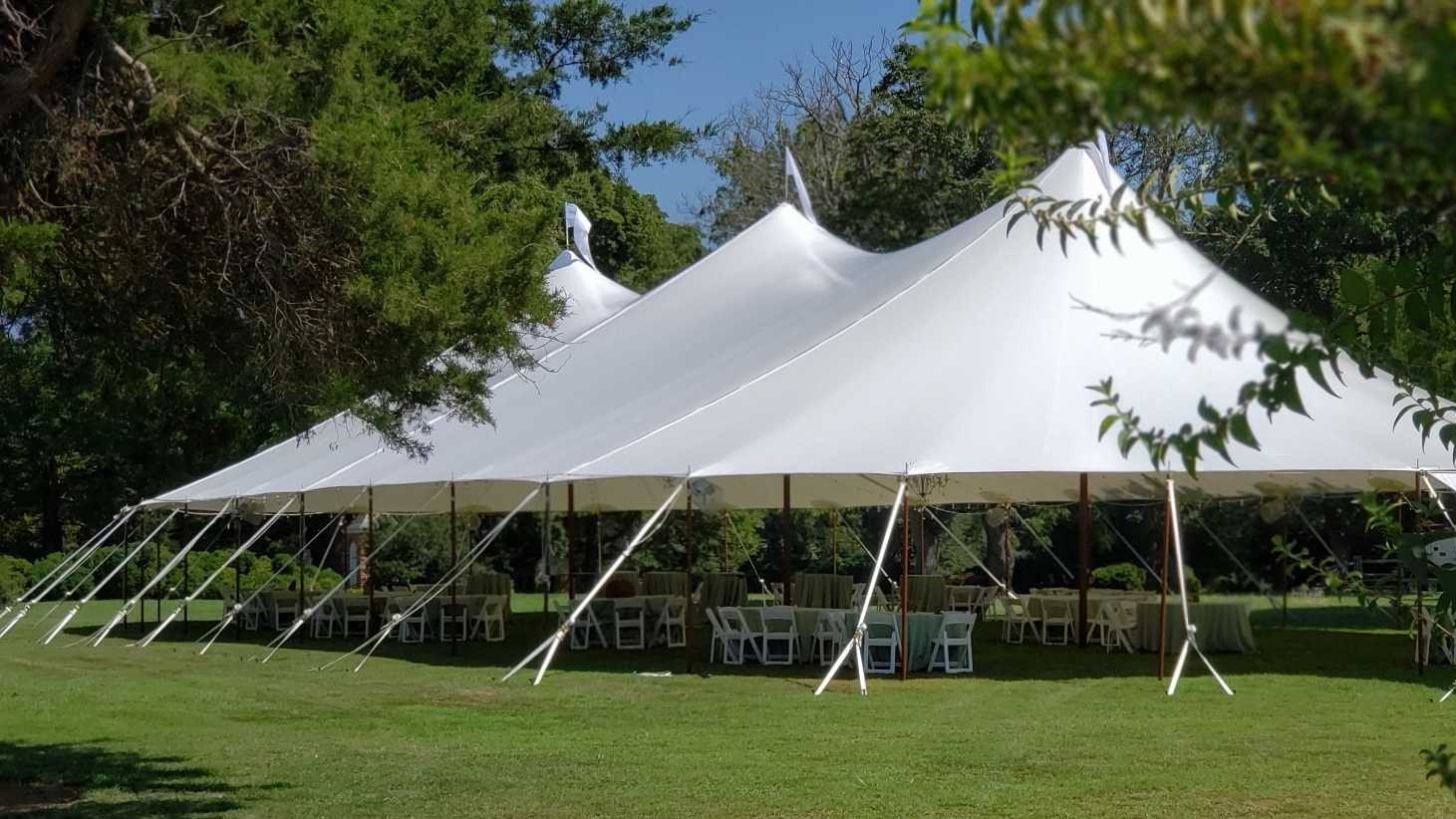
Sailcloth Tent
Which Has More Size Options: Sailcloth or Canopy?
Canopy offers significantly more size flexibility.
At Baystate, our sailcloth inventory is available in two primary widths: 32′ and 44′, with multiple lengths available in each series.
Our sailcloth sizes include:
- 32′ Series: 32’x30′, 32’x50′, 32’x70′, 32’x90′ and 32’x105′
- 44′ Series: 44’x43′, 44’x63′, 44’x83′, 44’x103′, 44’x123′ and 44’x143′
Our larger canopy inventory includes 30′, 40′, 60′ and 80′ wide tents, with numerous lengths available. Our largest configurations can accommodate events on a scale that simply isn’t possible with our sailcloth inventory.
That makes canopy more than just the more budget-friendly option. For guest counts over 300, canopy tents may simply be the more appropriate sized tent.
You can learn more about our sailcloth tents and canopy tents individually if you’re comparing specific sizes.
Which Is Better for a Wedding: Sailcloth or Canopy?
Both can be beautiful wedding tents. The better choice depends on your budget, property, guest count and overall vision!
- Choose sailcloth if the appearance of the tent itself is an important part of your design and you love the look of real wood poles, softer ivory-white vinyl, rounded edges and warm filtered light.
- Choose canopy if you want a classic white wedding tent, need greater flexibility in tent sizing or would rather allocate more of your budget toward other parts of the wedding.
And remember: the tent is only one piece of the finished space!
Both can accommodate beautiful tables and chairs, dance floors, bars, lighting, draping and other rentals. We’ve seen simple canopy weddings that look incredible and sailcloth weddings that barely needed additional décor at all.
The goal isn’t to pick the tent someone tells you is “better.” It’s to pick the one that makes sense for your event!
Canopy Tent
Sailcloth vs. Canopy Tent FAQs
What is the difference between a sailcloth tent and a regular tent?
“Sailcloth” refers to a specific style of pole tent. At Baystate, sailcloth tents have real wood poles, a slightly translucent ivory-white sailcloth vinyl top and rounded edges. Our standard canopy pole tents have aluminum poles, white block-out vinyl and straight edges.
Is a sailcloth tent the same as a canopy tent?
No. Although both are pole tents with center poles and both require staking, the materials, shape, sidewalls, lighting effect and overall appearance are different.
Why is a sailcloth tent more expensive than a canopy tent?
Sailcloth is an upgraded tent style with different materials and construction, including real wood poles, sailcloth vinyl and a rounded perimeter. The tent itself also contributes more to the overall event design, which can reduce how much additional décor you feel you need.
Do sailcloth tents let in more natural light?
Yes. Baystate’s sailcloth vinyl is slightly translucent, so natural light filters through the top without the material being see-through. Our white canopy vinyl is block-out material and does not filter light in the same way.
Can you get a sailcloth tent without center poles?
No. Sailcloth tents are pole tents and require center poles. If you want an open interior without center poles, a frame tent or structure is a better option.
Can you put sidewalls on sailcloth and canopy tents?
Yes. Baystate’s sailcloth tents have clear roll-up sidewalls that can be raised and lowered as needed. Canopy tents can have clear, French window or solid white sidewalls that clip onto a perimeter rope and are installed or removed by individual panel.
Can you add bistro lighting to both tents?
Yes! Baystate’s bistro lighting can be installed in both sailcloth and canopy tents. The difference is how the tent top interacts with that light: sailcloth allows some of the light to filter through, while the canopy’s block-out vinyl does not.
How much extra space do you need for a sailcloth tent?
Baystate requires 12 additional feet around a sailcloth tent for staking. Our canopy tents require 10 additional feet. Both tent styles must be staked and cannot be ballasted.
So, What’s the Difference Between a Sailcloth and Canopy Tent?
The difference between a sailcloth and canopy tent comes down to much more than wood poles versus aluminum poles.
- The sailcloth’s ivory-white translucent top, real wood poles, rounded perimeter and roll-up clear sidewalls create a softer, more elevated look that has made it especially popular for weddings.
- The canopy’s white block-out top, aluminum poles and straight perimeter create a classic, versatile tent that’s available in a much wider range of sizes and at a more budget-friendly price.
Neither is the “wrong” tent. They’re just different!
And sometimes you really do have to see them in person to understand just how different. Stay in touch with our social media pages for recent weddings!
If you’re deciding between the two, our team can help you compare your guest count, layout, property, budget and overall vision to determine which tent makes the most sense for your event. Contact us today!

Wedding Whisperer | Dog Mom | Creative Enthusiast
Samantha has been an integral part of the Baystate Tent & Party team since 2016, combining a lifelong passion for weddings and special events with years of hands-on experience in the event rental industry. She loves helping clients bring their vision to life, balancing creative design with thoughtful planning and attention to detail to create celebrations that feel effortless. Known for building lasting relationships with her clients, Samantha believes every event is unique and enjoys guiding couples through the planning process with honesty, organization, and genuine excitement for their big day. When she’s not talking tents and timelines, Samantha is a true lake girl who enjoys spending time with her black lab, Frankie, soaking up the sunshine, and getting lost in a good romance novel.